Summer School 2026 Daily Report – Day 2: Climate Change, Environmental Transformation, and Arctic Futures
The second day of the NVP International Summer School 2026 focused on one of the defining characteristics of the contemporary Arctic: change. Through perspectives ranging from climate science and marine ecology to geopolitics and anthropology, participants explored how environmental transformation is reshaping both Arctic landscapes and the societies that depend upon them.
The day began with an overview of the physical transformation of the Arctic climate system by Richard Davy of the Nansen Environmental and Remote Sensing Center (NERSC). Participants were introduced to the scientific evidence behind Arctic amplification – the phenomenon whereby the Arctic is warming significantly faster than the global average. Among the most visible consequences are the rapid decline of sea ice, earlier snowmelt, changing precipitation patterns, and increasing wildfire activity in northern regions. While these changes are often discussed in terms of climate statistics, the lecture highlighted how they are already altering ecosystems, landscapes, and human activities across the Arctic.
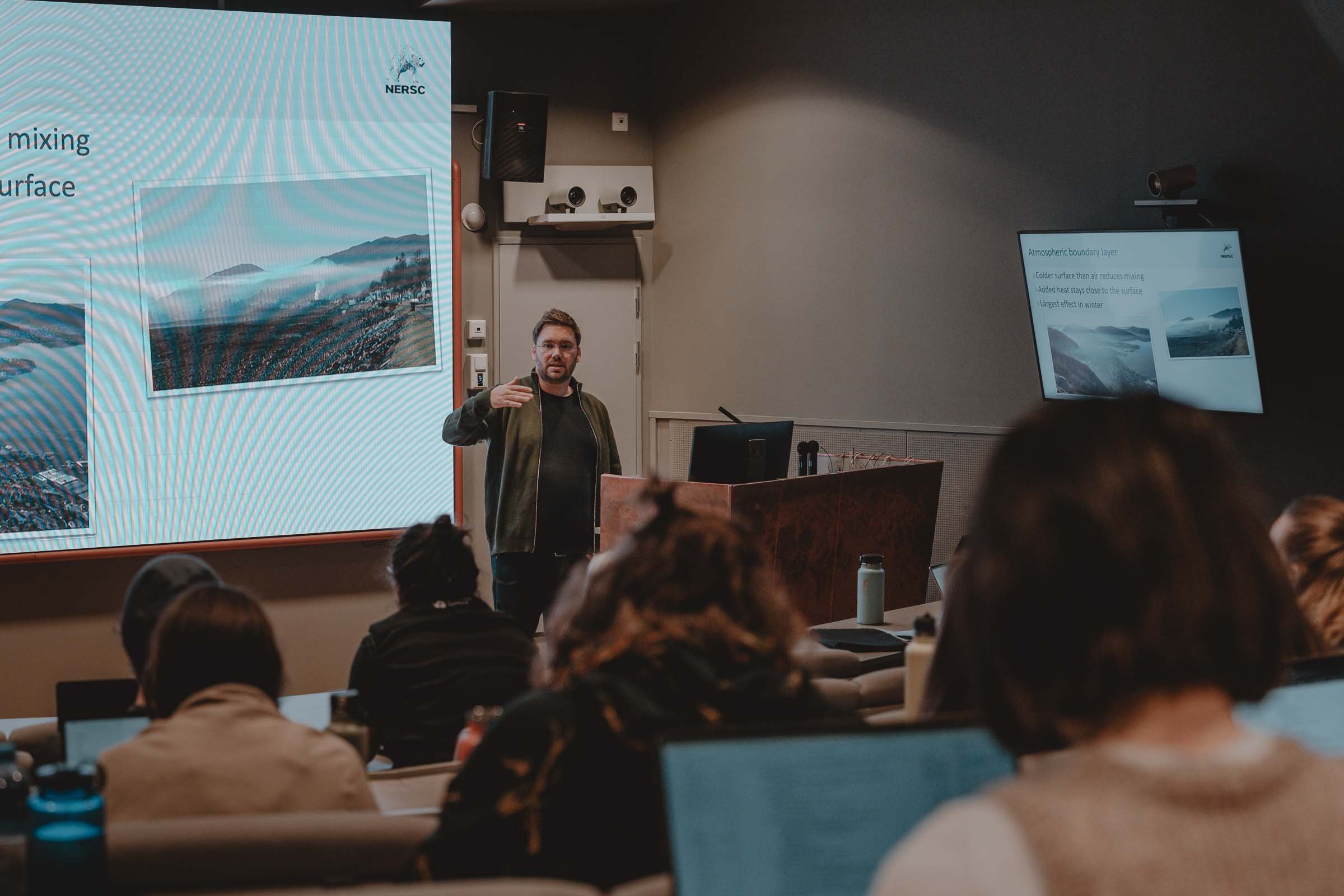
Richard Davy (NERSC) presenting the physical transformation of the Arctic climate system, highlighting the rapid decline of sea ice and the far-reaching consequences of Arctic amplification. Photo: Ragnhild Utne / NVP
The ecological consequences of these changes were explored further in a lecture by Janne Søreide, Professor of Arctic Marine Ecology at UNIS. Focusing on Arctic marine ecosystems, she demonstrated how changes in sea ice, ocean temperatures, and the inflow of warmer Atlantic waters are affecting marine food webs around Svalbard. Participants were introduced to the remarkable productivity of Arctic waters and the intricate connections between sea ice, algae, zooplankton, fish, seabirds, and marine mammals. The lecture highlighted how environmental changes in one part of the system can cascade through entire ecosystems, illustrating the complexity of ecological responses to a warming Arctic.
A recurring theme throughout the day was that environmental change cannot be understood in isolation from broader societal and political developments. This perspective was explored in a lecture by Caroline Kennedy-Pipe, Professor of War Studies and International Security at Loughborough University, who examined geopolitics in a changing Arctic. Discussions centred on how climate change, shifting sea routes, resource interests, and renewed strategic competition are increasing international attention towards the region. Participants reflected on how countries far beyond the Arctic are becoming involved in Arctic affairs and how the region is increasingly connected to global political and economic developments.
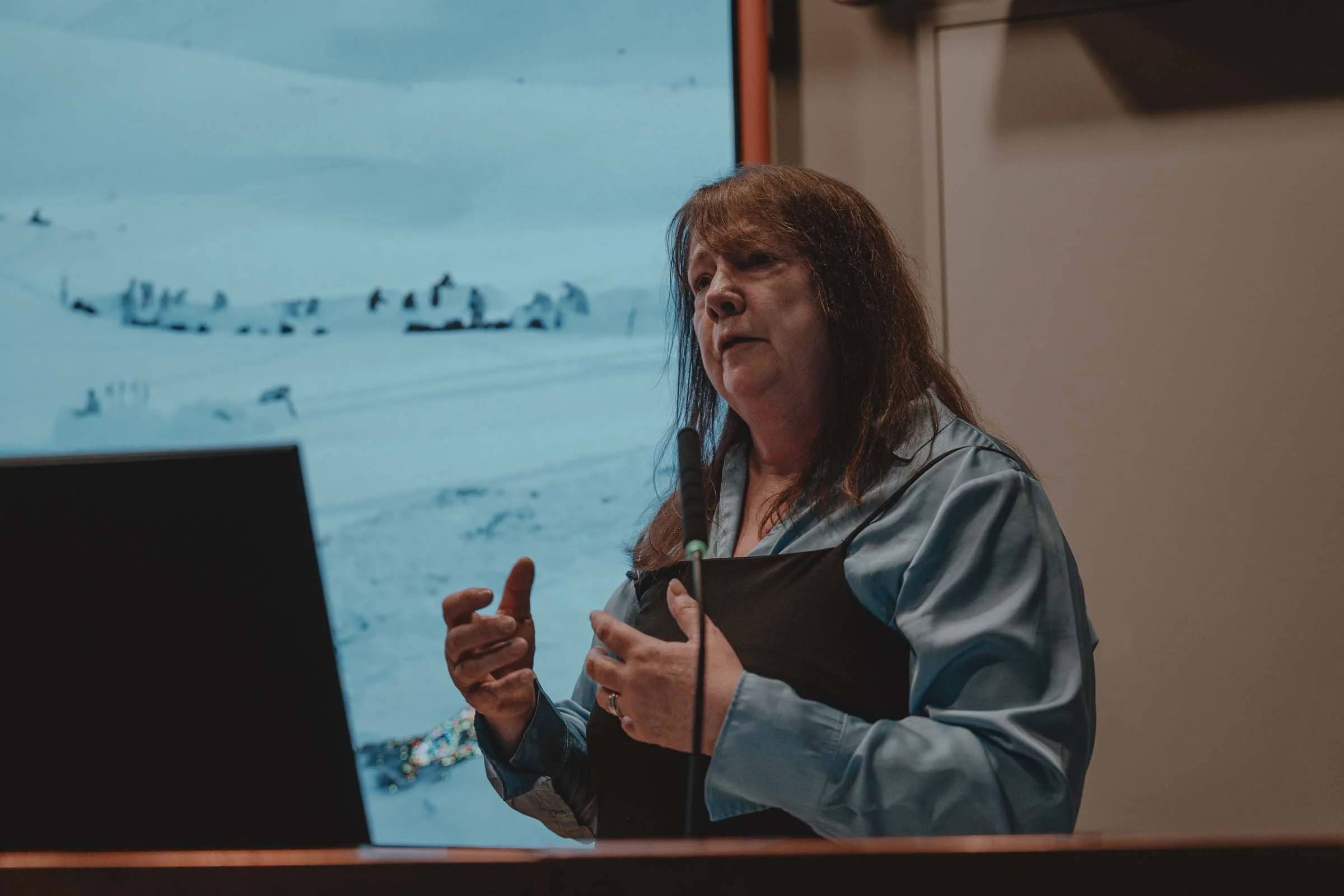
Caroline Kennedy-Pipe (Loughborough University) discussing how climate change, security concerns, and international interests are reshaping Arctic geopolitics. Photo: Ragnhild Utne / NVP
Participants were also introduced to the changing physical landscape of Svalbard through a lecture by Mike Retelle, Professor of Arctic Geology at UNIS. Drawing on long-term monitoring data, he demonstrated how warming temperatures are transforming glaciers, permafrost, hydrological systems, and geomorphological processes across the archipelago. Examples from Longyearbyen and the Linnédalen areas illustrated how increasing rainfall, thawing permafrost, and changing seasonal patterns are contributing to new environmental hazards and reshaping Arctic landscapes in real time. Recent observations from Svalbard, including exceptionally warm summers and record permafrost thaw, provided a tangible reminder that many of the changes discussed throughout the day are already underway.
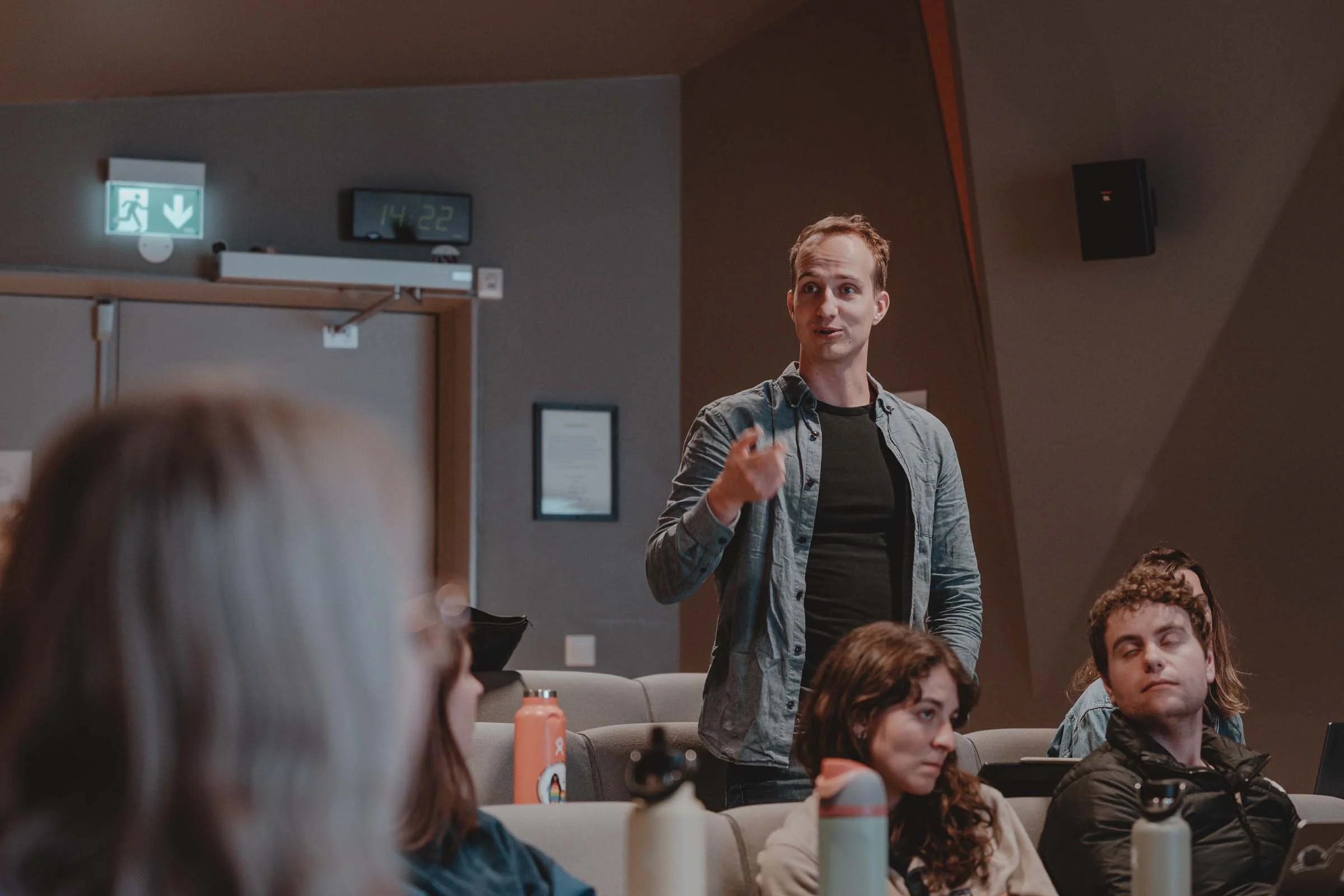
Summer school participant Daan briefly presenting his study on Svalbard’s record-breaking summer of 2024, and anomalies beyond climatological warming trends, following a reference to the paper in Mike Retelle’s lecture. Photo: Ragnhild Utne / NVP
The day concluded with a lecture by Mark Nuttall, Professor and Henry Marshall Tory Chair of Anthropology at the University of Alberta, who explored Greenland's place between local realities and global geopolitics. Using Greenland as a case study, he examined how climate change, resource development, self-determination, and international strategic interests intersect in Arctic communities. The lecture emphasised that Greenland is not merely a territory viewed through the lenses of climate change, critical minerals, or security policy, but also a society shaped by its own history, identity, and aspirations. Participants were encouraged to consider how local perspectives and lived experiences can sometimes challenge broader geopolitical narratives.
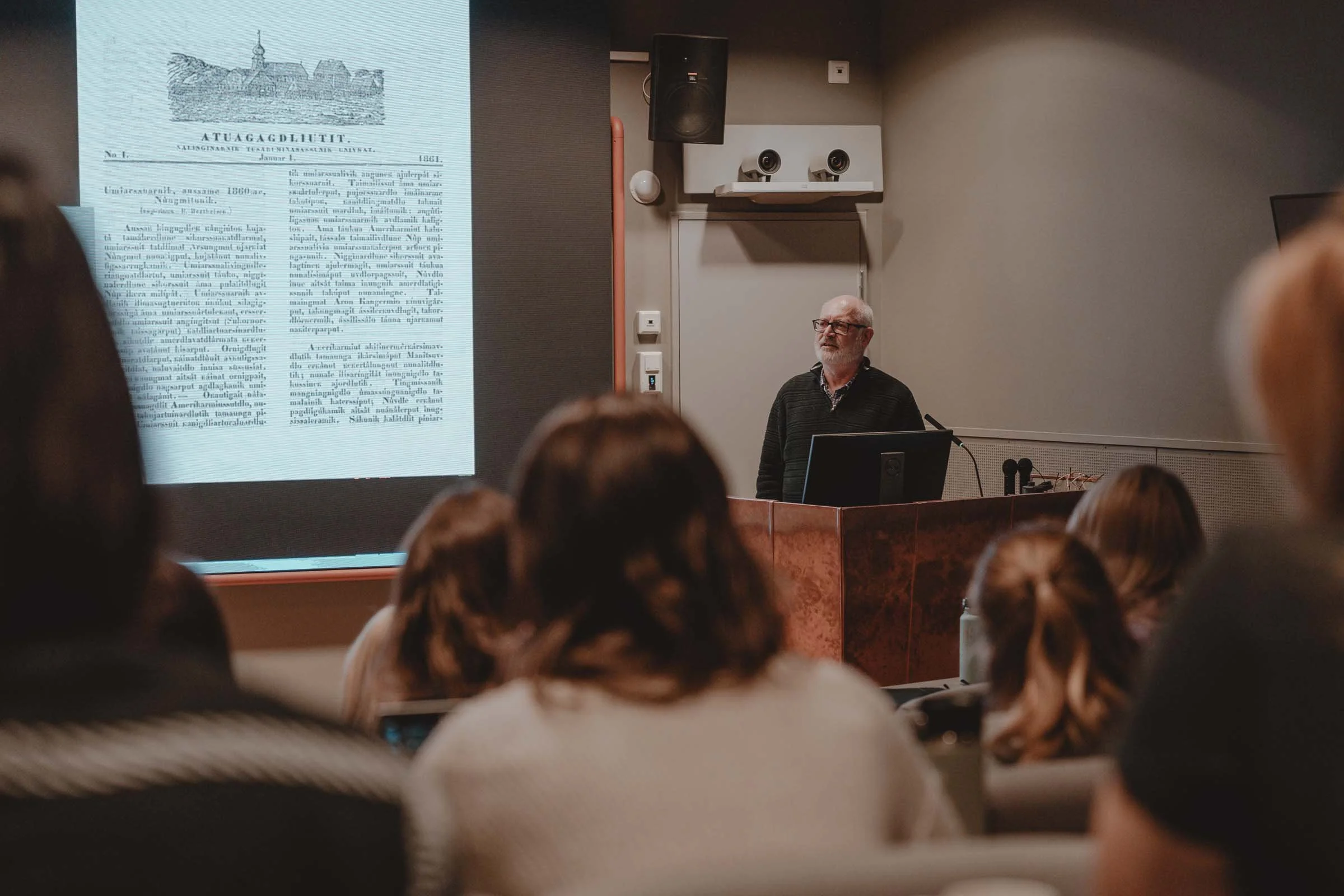
Mark Nuttall (University of Alberta) exploring Greenland’s position at the intersection of local realities, climate change, self-determination, and global geopolitics. Photo: Ragnhild Utne / NVP
Taken together, the lectures highlighted the interconnected nature of Arctic change. Climate processes influence ecosystems, landscapes, economies, infrastructure, governance, and international relations, while local communities experience these transformations in diverse and often complex ways. As participants continue the summer school, understanding these connections remains central to exploring the challenges and opportunities facing the Arctic in the decades ahead.
Tomorrow, participants will take part in Arctic field safety training provided by UNIS, gaining practical knowledge and skills essential for safe travel and fieldwork in Svalbard, particularly in relation to polar bear safety.