

Summer School 2026 Daily Report – Day 3: Preparing for the Arctic Field Environment
After two days of lectures and discussions, the third day of the NVP International Summer School 2026 moved from the classroom to the field. Participants spent the day undertaking Arctic safety training with instructors from the University Centre in Svalbard (UNIS), gaining practical knowledge and experience essential for travelling and working safely in Svalbard's unique environment.
The morning began with an introduction to health, safety, and environmental considerations for fieldwork in Svalbard. Through a combination of lectures and discussions, participants were introduced to potential risks encountered in the Arctic, including rapidly changing weather conditions, challenging terrain, cold exposure, and emergency situations far from settlements and infrastructure. Particular emphasis was placed on planning, preparedness, appropriate clothing, and decision-making in the field.
A significant part of the training focused on polar bear safety. As the world's northernmost permanent settlement, Longyearbyen is surrounded by wilderness where polar bears may occur year-round. Participants were therefore introduced to the principles of polar bear awareness and risk assessment, learning how to minimise risks while travelling in the field and how to respond appropriately in different situations.
Following lunch, the group travelled to Adventdalen for the practical component of the training. Here, students and lecturers participated in a series of realistic field scenarios designed to simulate encounters with polar bears.
The practical session provided an opportunity to translate theory into action and offered valuable insight into the responsibilities associated with conducting research and field activities in Svalbard.
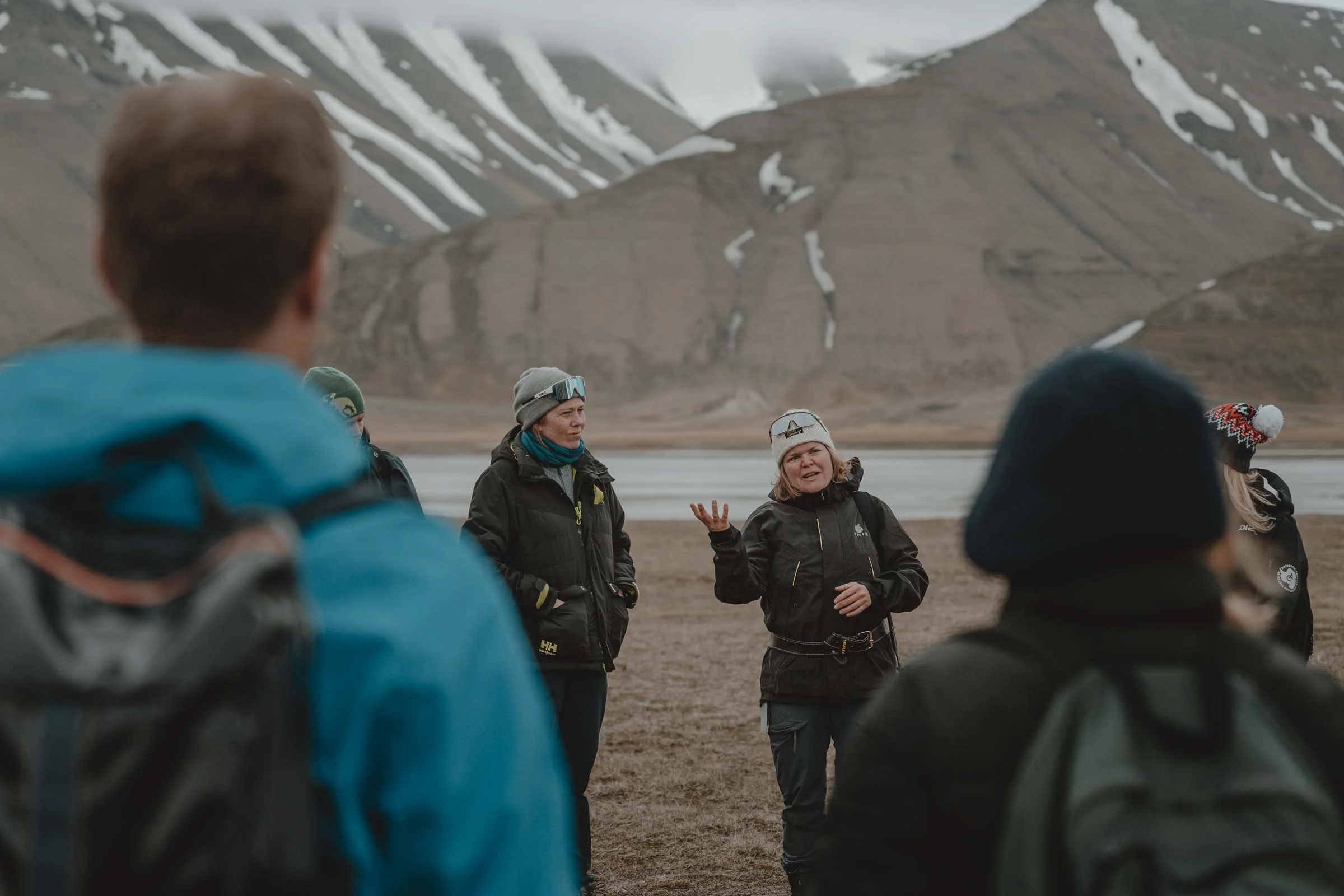
UNIS instructors Ingrid Kåstad and Marie Brekkhus leading the practical polar bear safety training in Adventdalen, introducing participants to field procedures and safety considerations in Svalbard. Photo: Ragnhild Utne / NVP
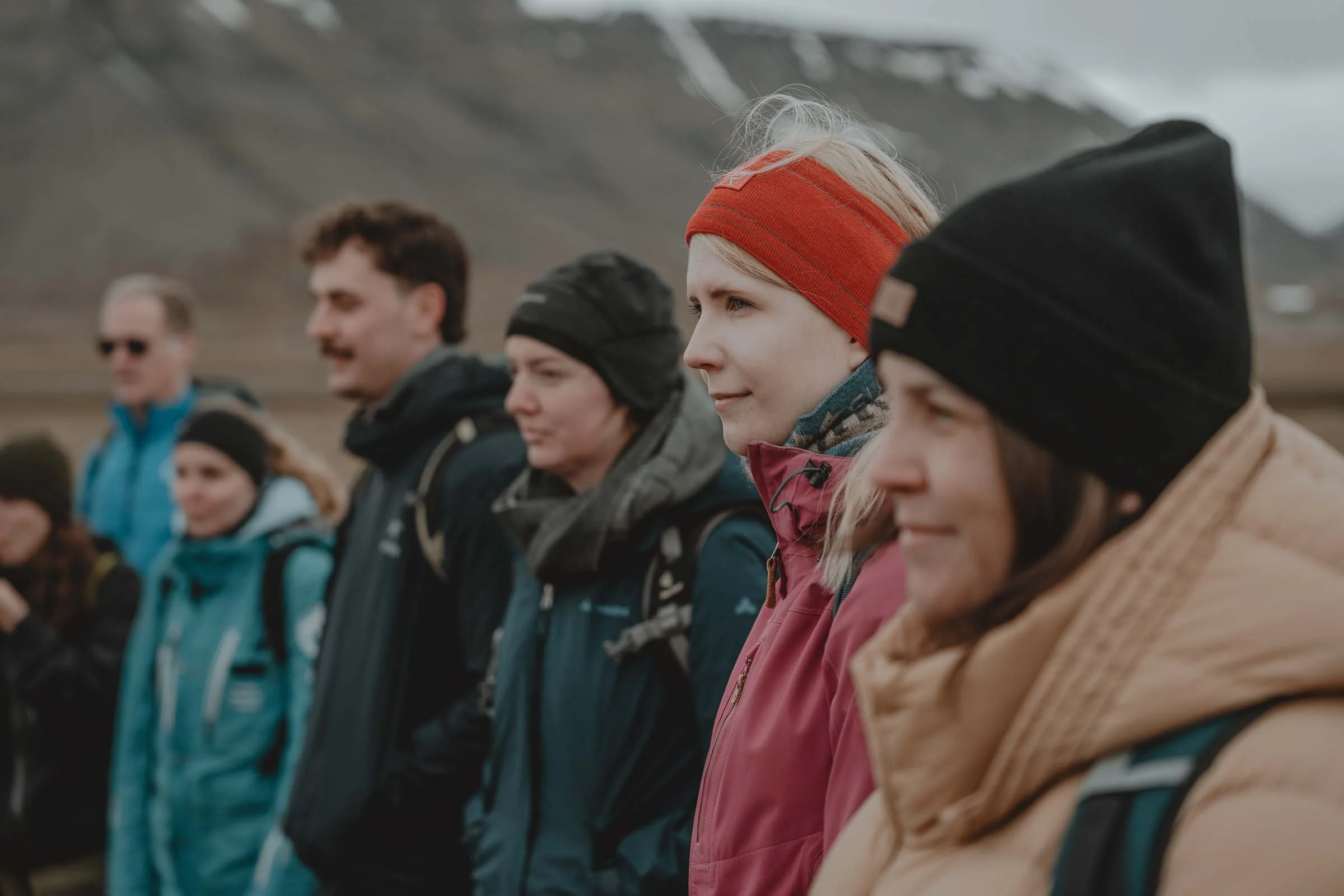
Participants following the practical safety training closely, learning essential skills for safe travel and fieldwork in the Arctic environment. Photo: Ragnhild Utne / NVP
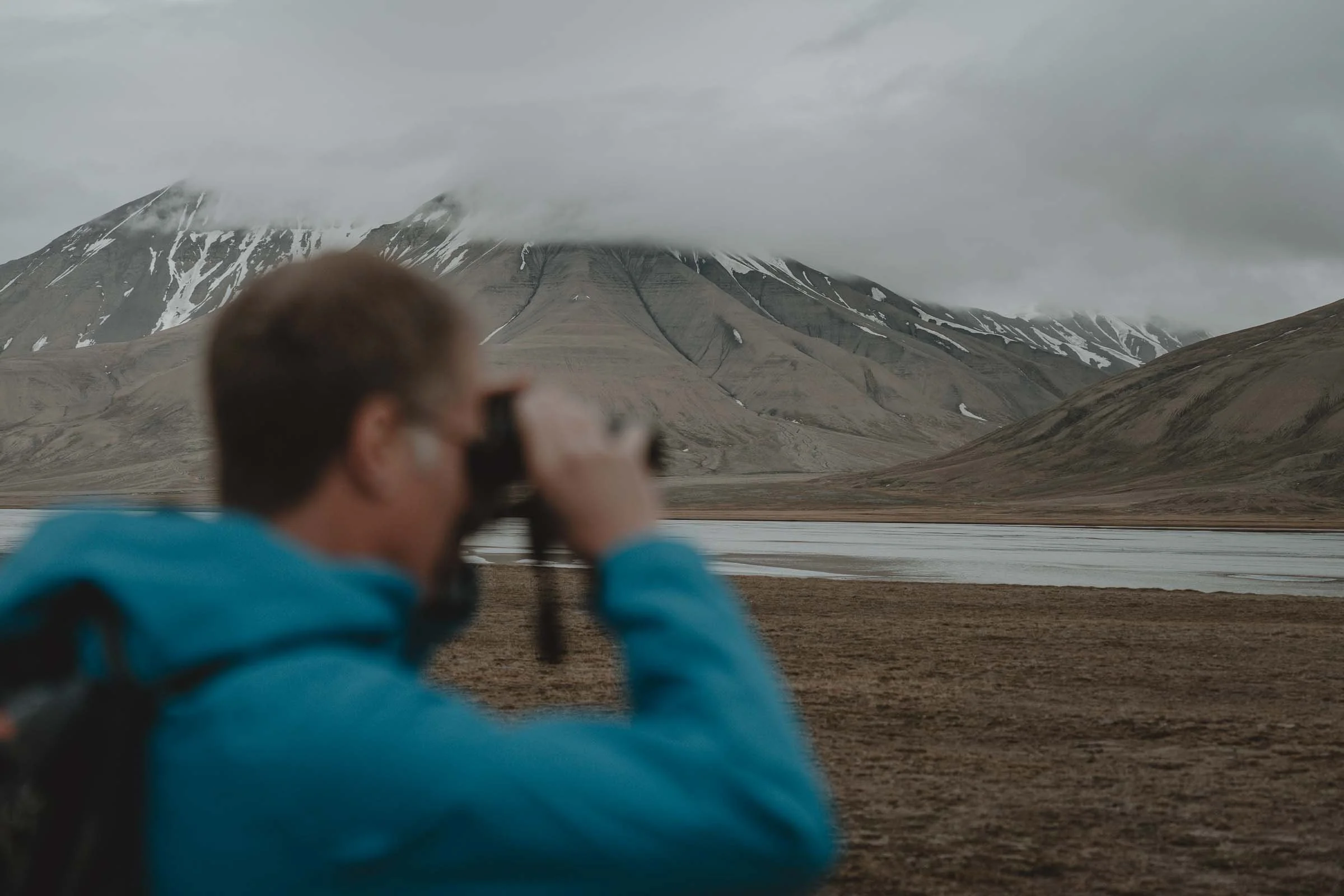
A participant scanning the surrounding landscape through binoculars during a simulated polar bear encounter. Photo: Ragnhild Utne / NVP
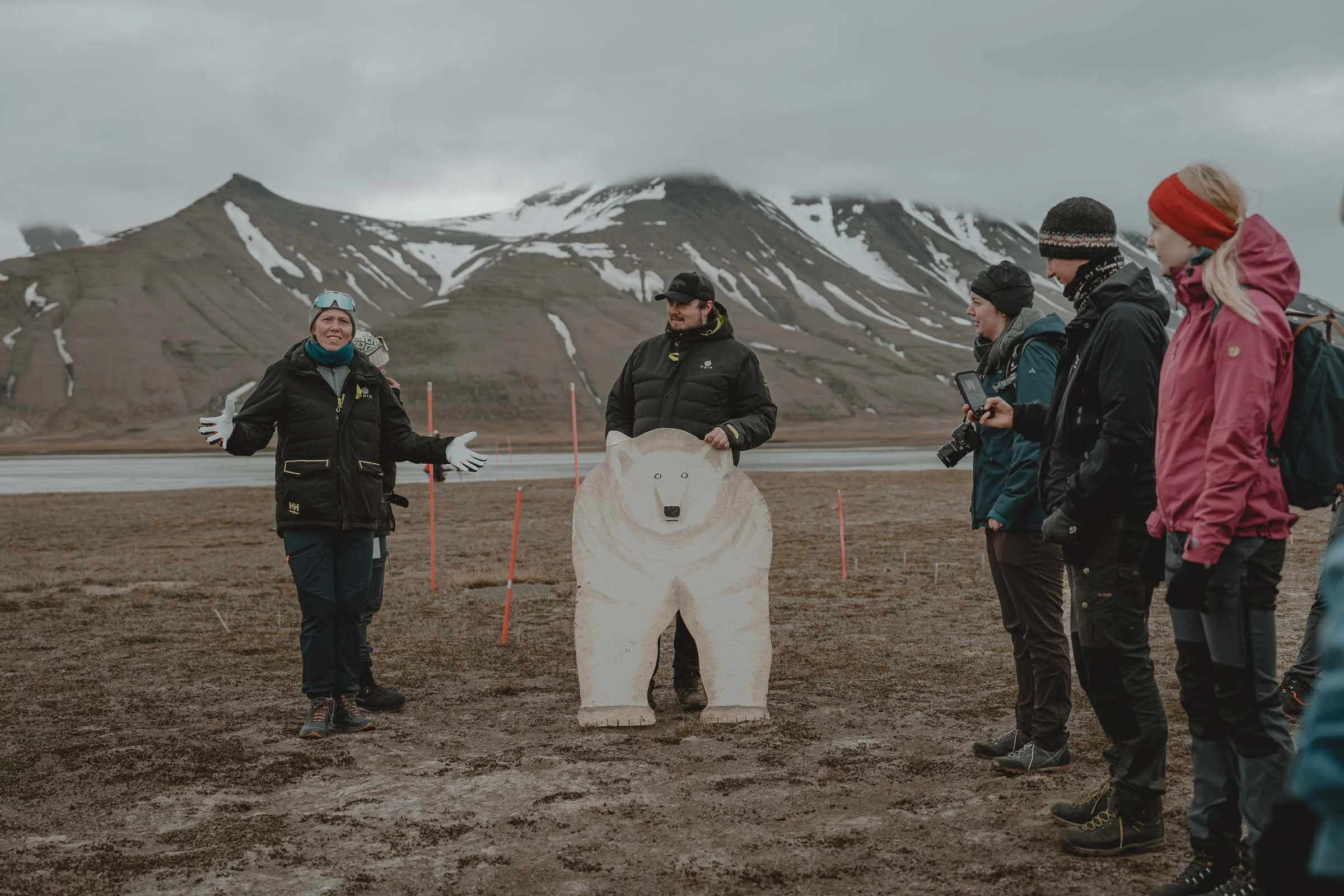
A remarkably realistic plywood polar bear served as the focus of one of the training scenarios, while UNIS instructors Ingrid Kåstad and Stig Magnus Lunde guided participants through appropriate response procedures. Photo: Ragnhild Utne / NVP
Following the safety training, the group continued outdoors with a hike to Varden and Platåfjellet overlooking Longyearbyen. The walk offered panoramic views of Adventdalen, Isfjorden, and the surrounding mountains, while also providing participants with an opportunity to experience the Arctic landscape firsthand.
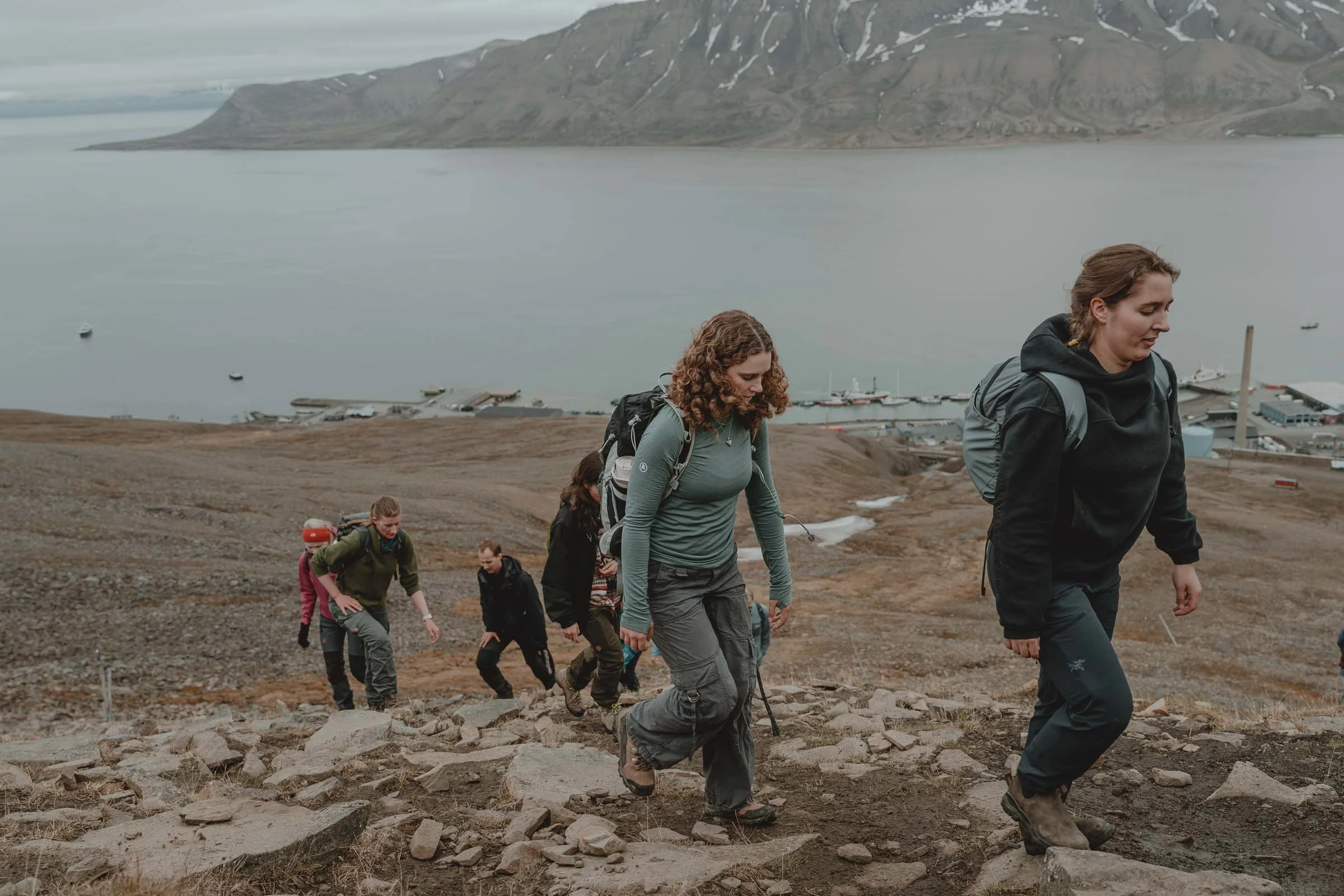
Students and lecturers hiking towards Varden and Platåfjellet after completing the safety training, enjoying an afternoon in the Arctic landscape surrounding Longyearbyen. Photo: Ragnhild Utne / NVP
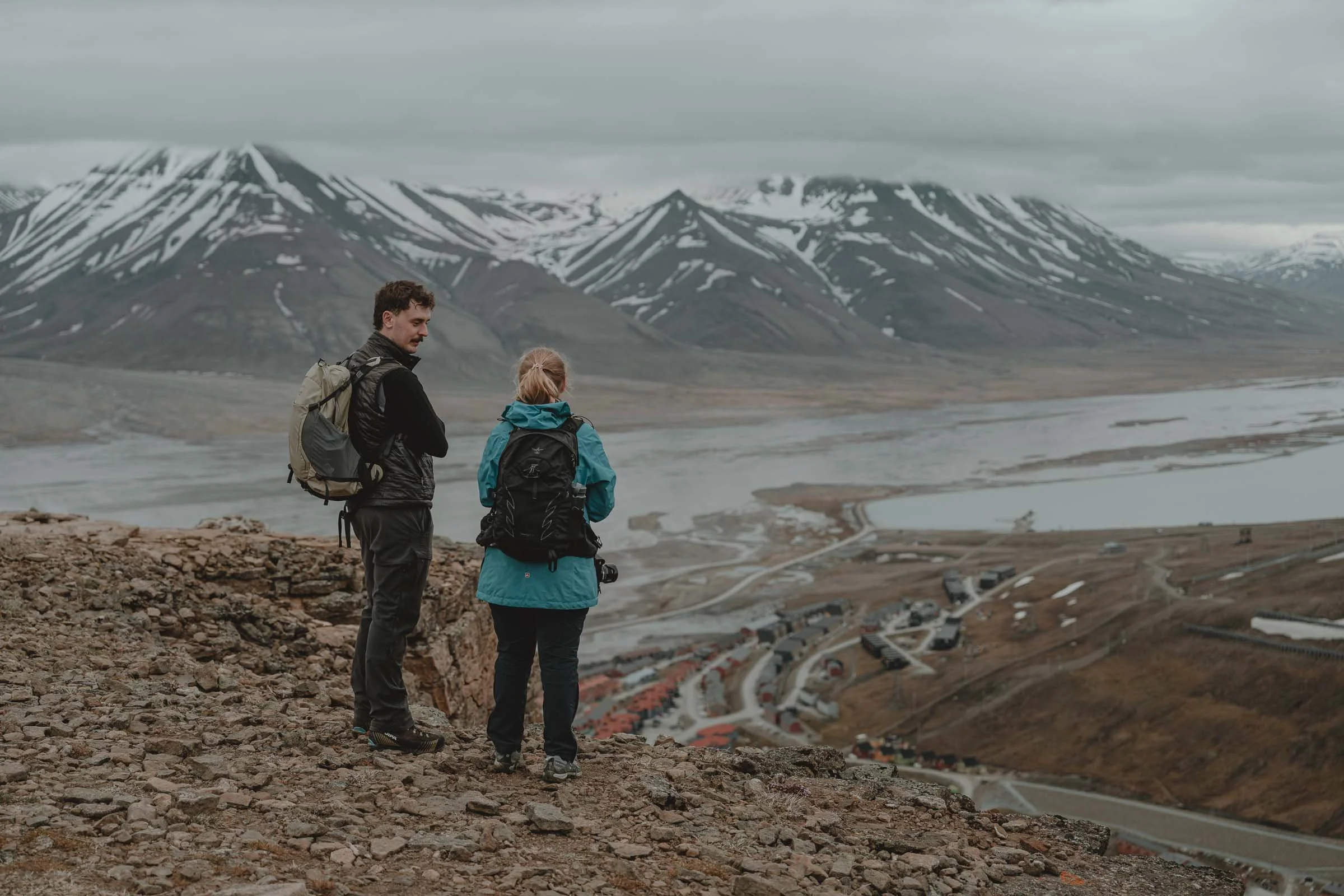
Participants taking in the view from the mountains above Longyearbyen, overlooking Adventdalen, the settlement, and the surrounding High Arctic landscape. Photo: Ragnhild Utne / NVP
Tomorrow, the summer school returns to broader discussions on Arctic governance, adaptation, energy transitions, Indigenous perspectives, and security challenges in a rapidly changing Arctic.