

Summer School 2026 Daily Report – Day 5: Field Excursion in Isfjorden
The fifth day of the NVP International Summer School 2026 took participants out into the field for a full-day RIB excursion in Isfjorden.
The original plan was to travel to Billefjorden and Nordenskiöldbreen. However, dense fog in the morning made it uncertain whether the trip could be carried out as planned. As visibility gradually improved across Isfjorden, the decision was made to change course and head instead towards Borebukta and Borebreen.
The group spent time observing Borebreen from the boats. The glacier is currently surging, and while the participants were gathered in the bay, loud cracks and rumbling sounds could be heard from the ice. With calm conditions on the water and occasional sunshine breaking through the clouds, the stop provided an excellent opportunity to observe an active glacier up close.
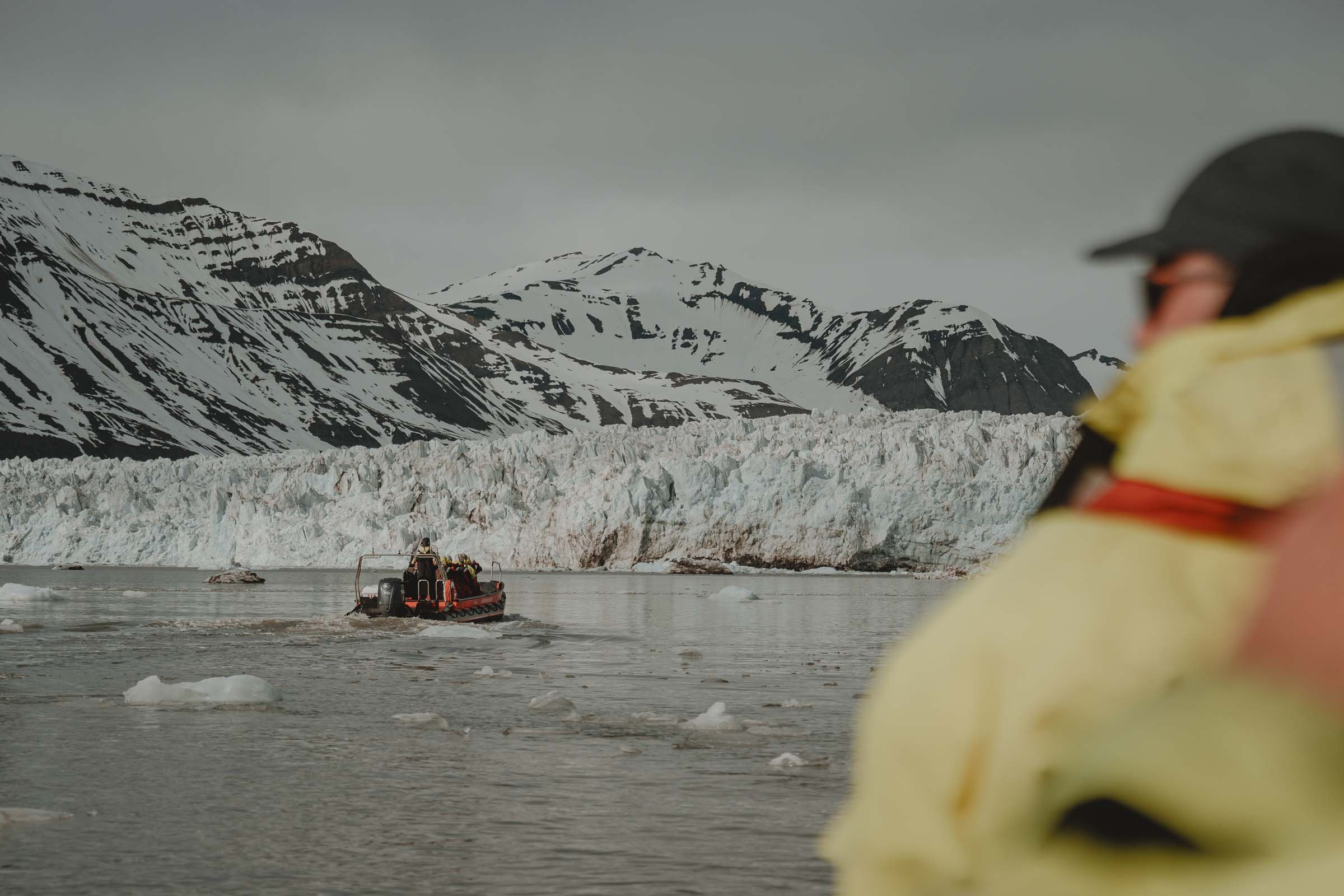
Borebreen (glacier), west of Isfjorden. Photo: Ragnhild Utne / NVP
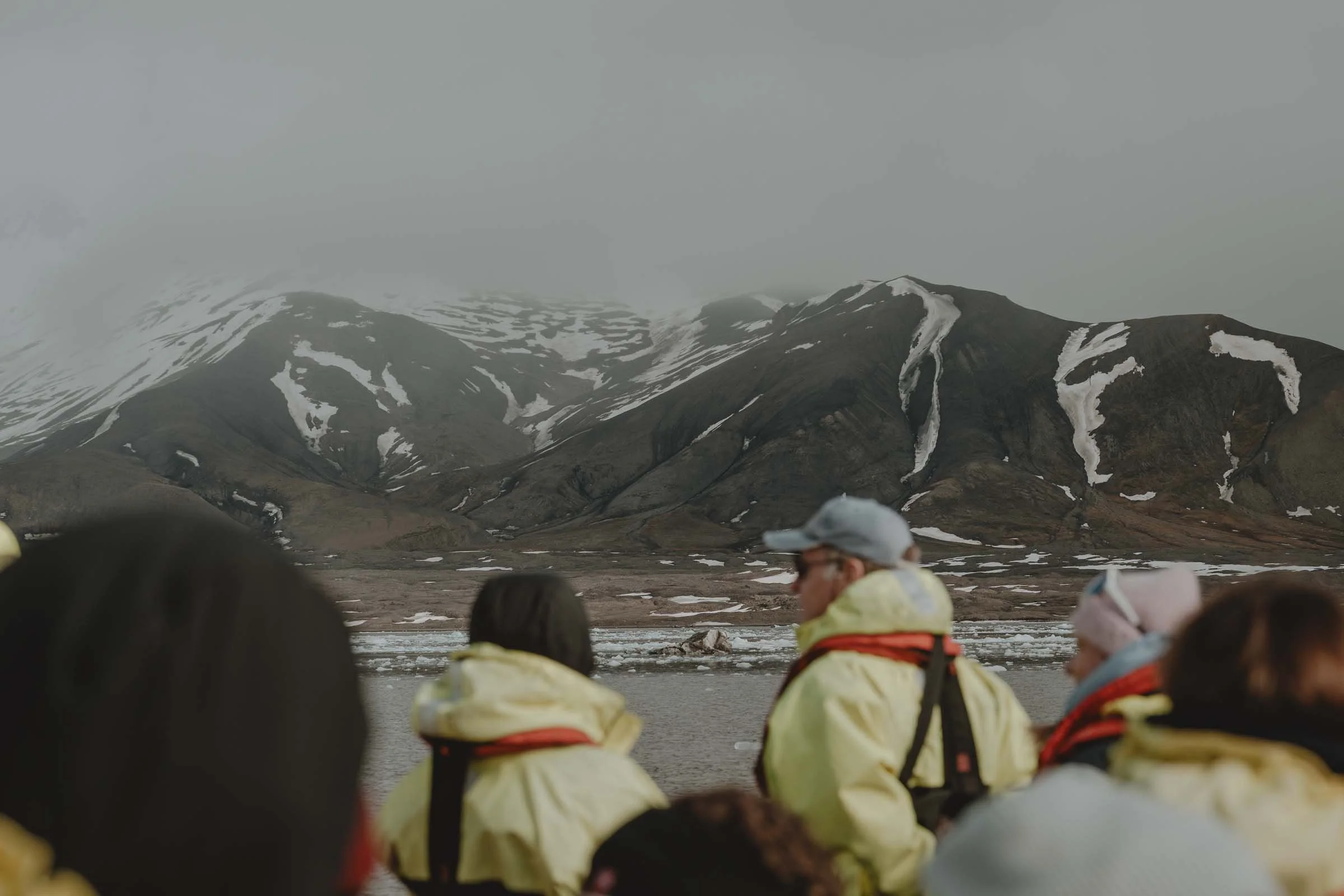
Participants were surrounded by spectacular Arctic landscape during the excursion. Photo: Ragnhild Utne / NVP
The excursion continued to a neighbouring bay, where participants viewed Nansenbreen from a distance. The group also encountered a number of walruses resting on the beach. As is often the case, the animals appeared largely uninterested.
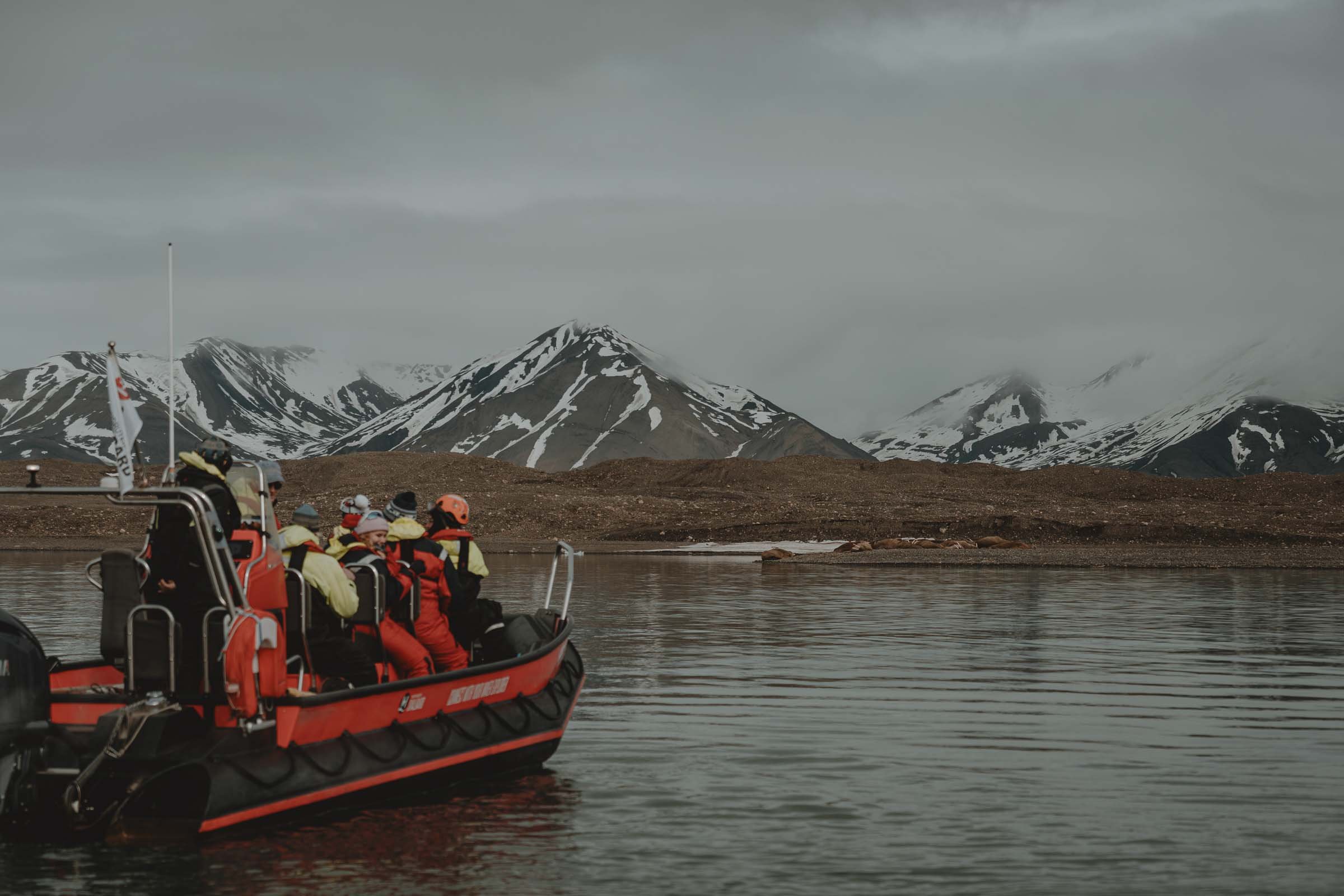
Observing walruses in across Isfjorden from Longyearbyen. Photo: Ragnhild Utne / NVP
Crossing Isfjorden eastwards, we then stopped outside Grumant, the former Soviet mining settlement, and the nearby bird cliffs at Fuglefjella. Here, participants learned more about the area's history and the importance of the cliffs as breeding grounds for seabirds.
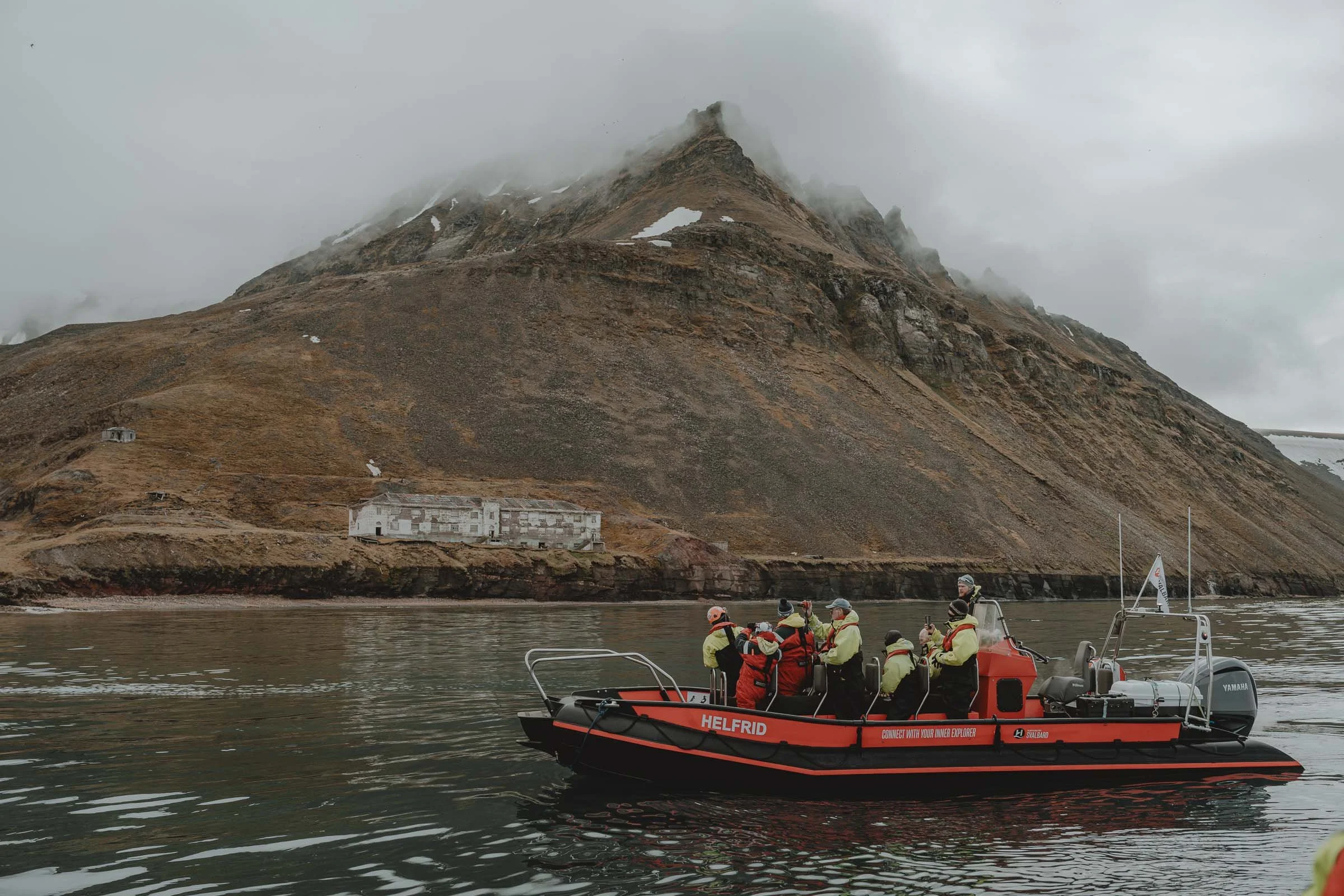
Grumant, the former Soviet mining settlement. Photo: Ragnhild Utne / NVP
The longest stop of the day was made in Hiorthhamn, located across the fjord from Longyearbyen. After landing, participants enjoyed lunch and hot drinks before joining a guided walk led by Mike Retelle, Professor of Arctic Geology at UNIS.
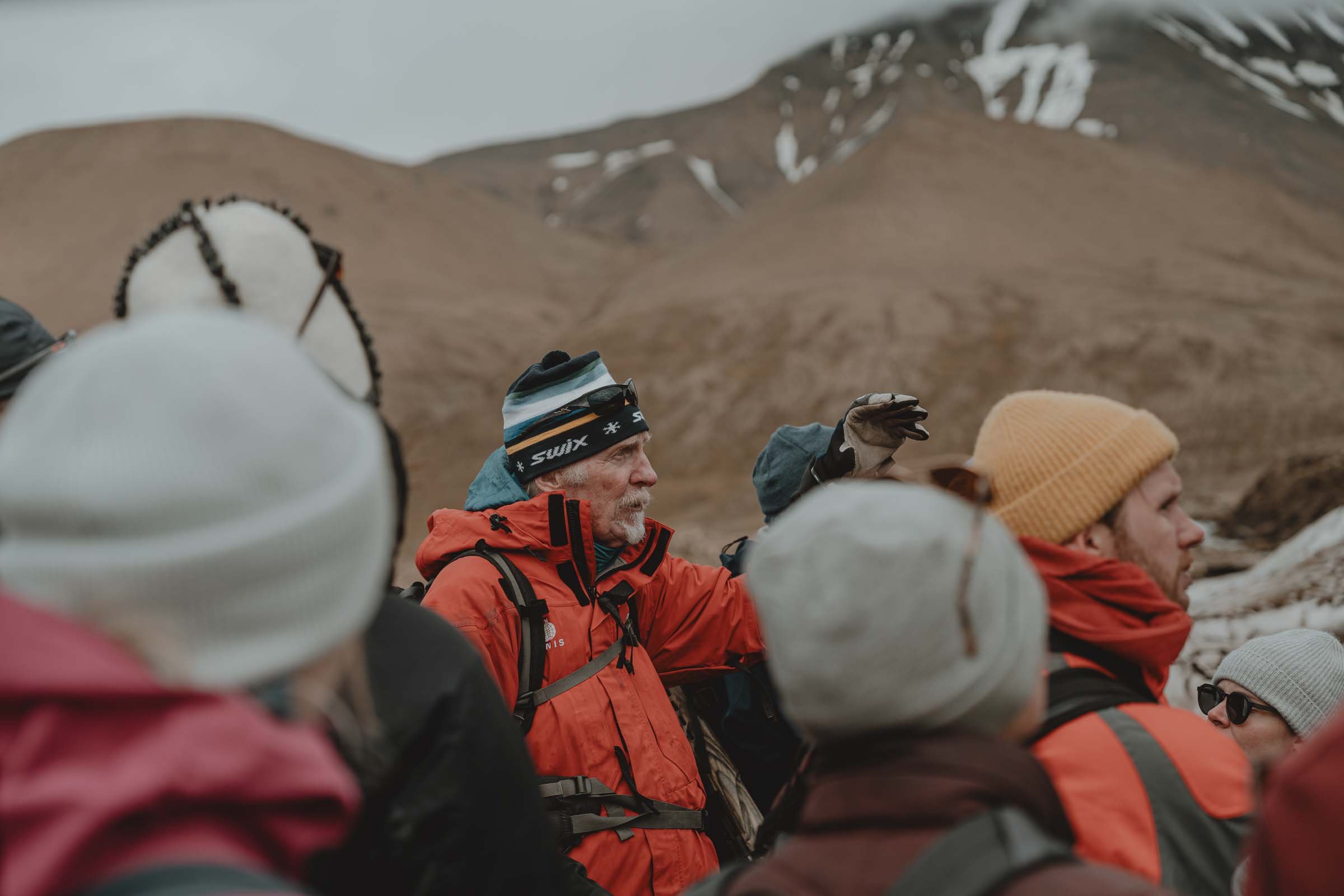
A guided walk in Hiorthhamn led by Mike Retelle, Professor of Arctic Geology at UNIS. Photo: Ragnhild Utne / NVP
During the excursion, the group examined several geological and geomorphological features, including landslides, coastal erosion, and a nearby pingo. Participants also explored raised beach deposits, where marine shells can still be found several metres above today's sea level. These observations provided useful examples of how natural processes and environmental change have shaped the landscape over time.
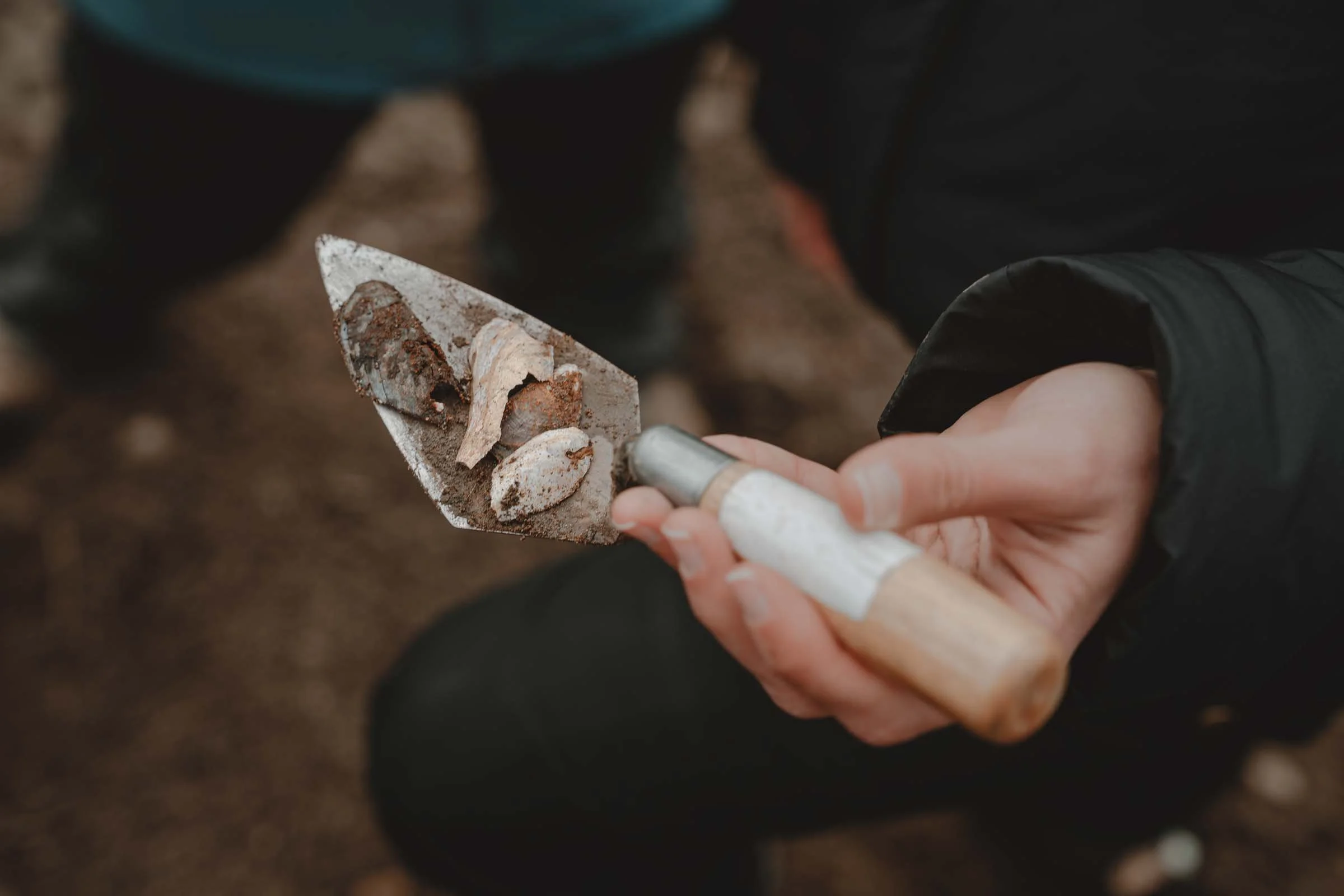
Raised beach deposits of marine shells were found in Hiorthhamn. Photo: Ragnhild Utne / NVP
The day offered many opportunities to connect themes from the lectures with observations in the field. Climate change, glacier retreat, permafrost, coastal processes, wildlife, and Arctic ecosystems could all be discussed in the landscapes where these changes are taking place.
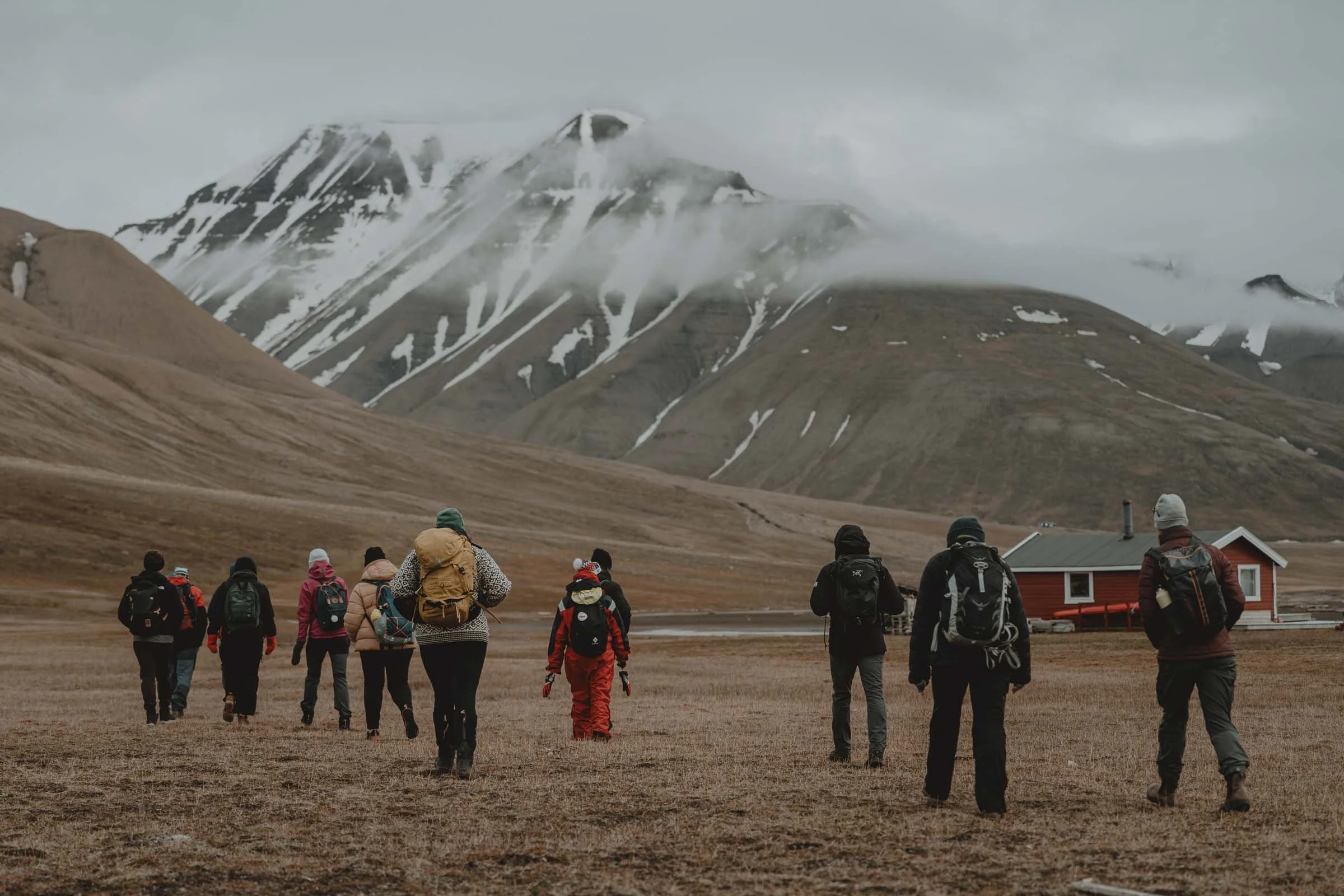
Walking to a nearby pingo in Hiorthhamn. Photo: Ragnhild Utne / NVP
Tomorrow, participants will continue their field-based learning with an excursion to Bjørndalen after morning lectures.