
The sixth day of the NVP International Summer School 2026 focused on Arctic ecosystems and some of the environmental challenges facing the region, including pollution, climate change, and their impacts on wildlife.
The morning lectures were led by Geir Wing Gabrielsen and Janne Søreide, who introduced participants to the effects of environmental pollution in the Arctic, the ecological importance of sea ice, and the ways in which climate change is affecting Arctic wildlife and marine ecosystems. Together, the presentations highlighted how changes occurring far beyond the Arctic can have significant consequences for species and ecosystems in the High North.
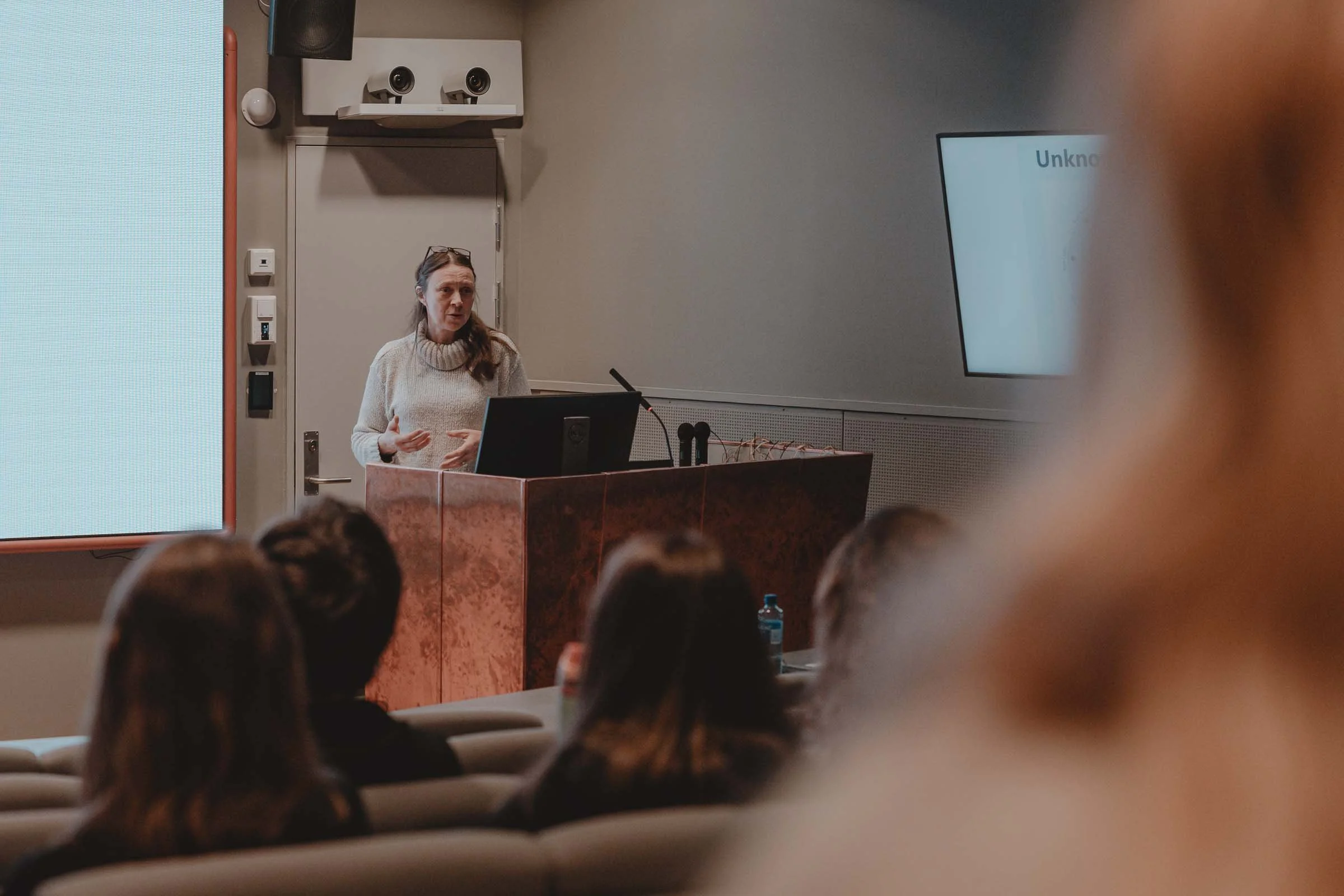
Janne Søreide (UNIS) presenting on the ecological importance of sea ice and the consequences of a rapidly changing Arctic marine environment. Photo: Ragnhild Utne / NVP
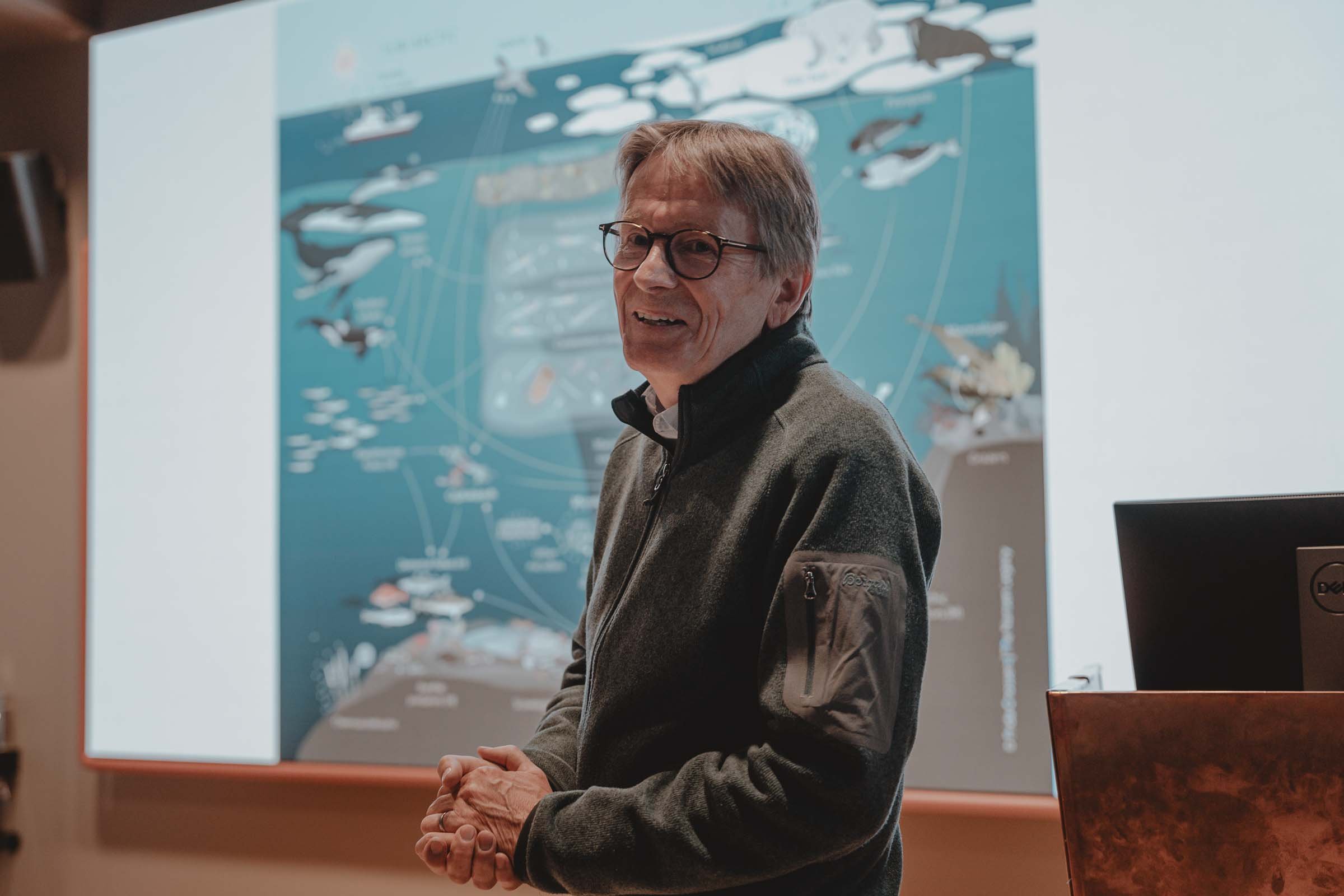
Geir Wing Gabrielsen (NPI/UNIS/NVP) discussing environmental pollution and the effects of climate change on Arctic wildlife and ecosystems. Photo: Ragnhild Utne / NVP
In the afternoon, participants travelled to Vestpynten and Bjørndalen for a field excursion led by Geir Wing Gabrielsen. Drawing on more than four decades of research experience in Svalbard, he introduced the group to local birdlife and discussed how seabirds can provide important insights into environmental change and pollution in Arctic ecosystems.
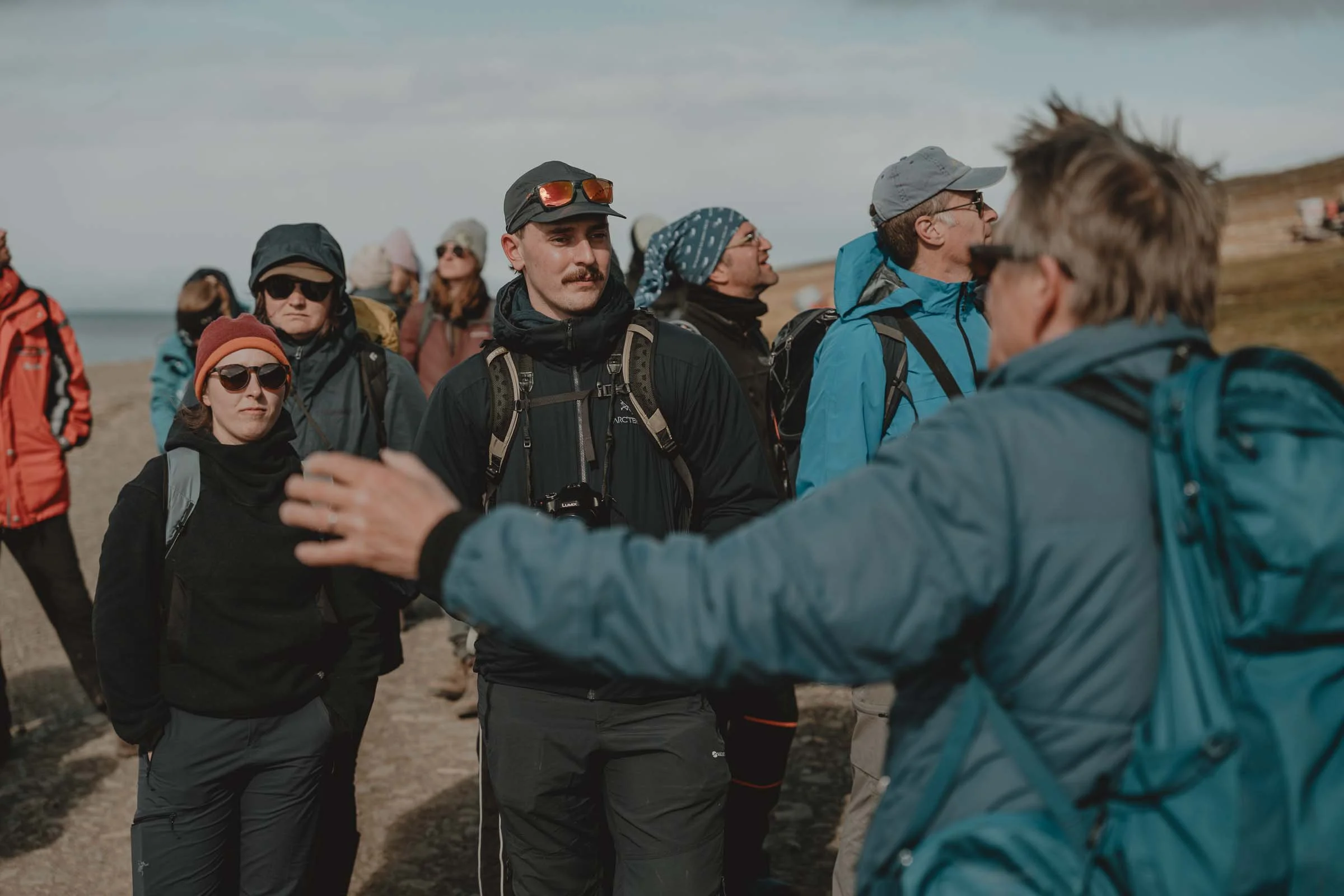
Geir Wing Gabrielsen (NPI/UNI/NVP) leading the field excursion in Bjørndalen, introducing participants to local birdlife and the role of seabirds in Arctic ecosystem research. Photo: Ragnhild Utne / NVP
The excursion also provided an opportunity to observe the landscape itself. In Bjørndalen, Bjørn P. Kaltenborn discussed the increasing coastal erosion affecting parts of western Spitsbergen. As sea ice no longer provides the same protection from waves and storm activity as it once did, the coastline is becoming increasingly exposed to erosion, leading to visible changes in the landscape.
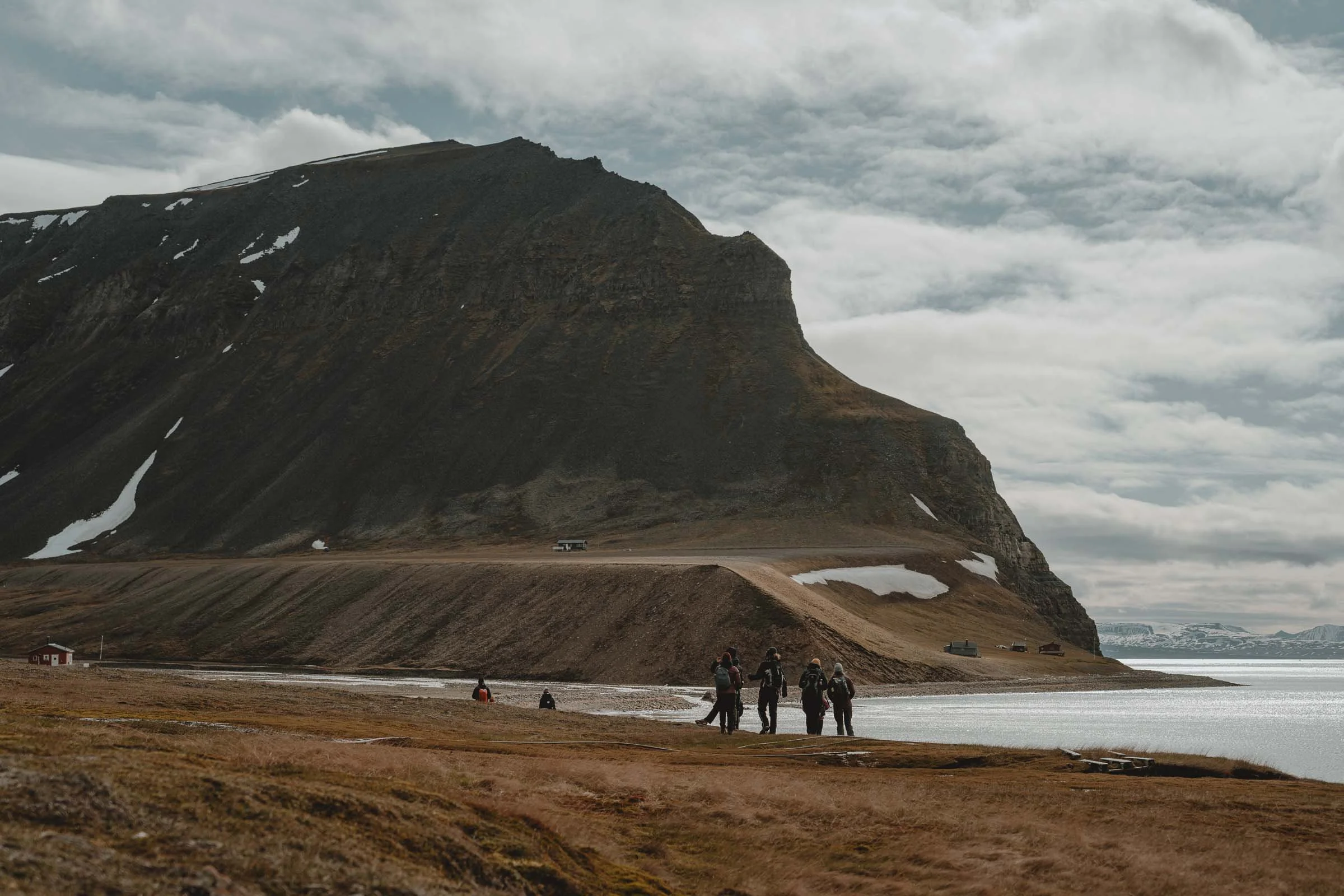
Participants exploring the landscape in Bjørndalen. Photo: Ragnhild Utne / NVP
Tomorrow, participants will continue their field-based learning during a glacier excursion, where they will explore some of the geological processes shaping Svalbard's rapidly changing environment.