
GoNorth 2025: Science in a stormy Arctic
The stormiest of the four GoNorth expeditions has drawn to a successful close, returning to port in Tromsø on the evening of 16 December. Although the primary target (Ultima Thule) could not be reached due to an engine issue, the science team yielded a wealth of scientific data not by following a fixed script, but by adapting continuously to the Arctic conditions that shaped every decision along the way.
Where the maps fade out
A highlight of the trip was how it shed light on seafloor structures that have so far remained poorly understood. A seismic line across the East Greenland Ridge and two adjoining features will help reconstruct the area’s deep geological history, imaging both the seafloor and what lies beneath.
What made this expedition distinctive was that seismic profiling was only one part of a broader, integrated approach. As the ship moved through the area, bathymetry was collected continuously, gradually revealing the shape of ridges, basins, and seamounts on the seafloor. At the same time, continuous measurements of the Earth’s gravity and magnetic fields recorded subtle variations linked to the rocks below, offering clues about their composition and structure.
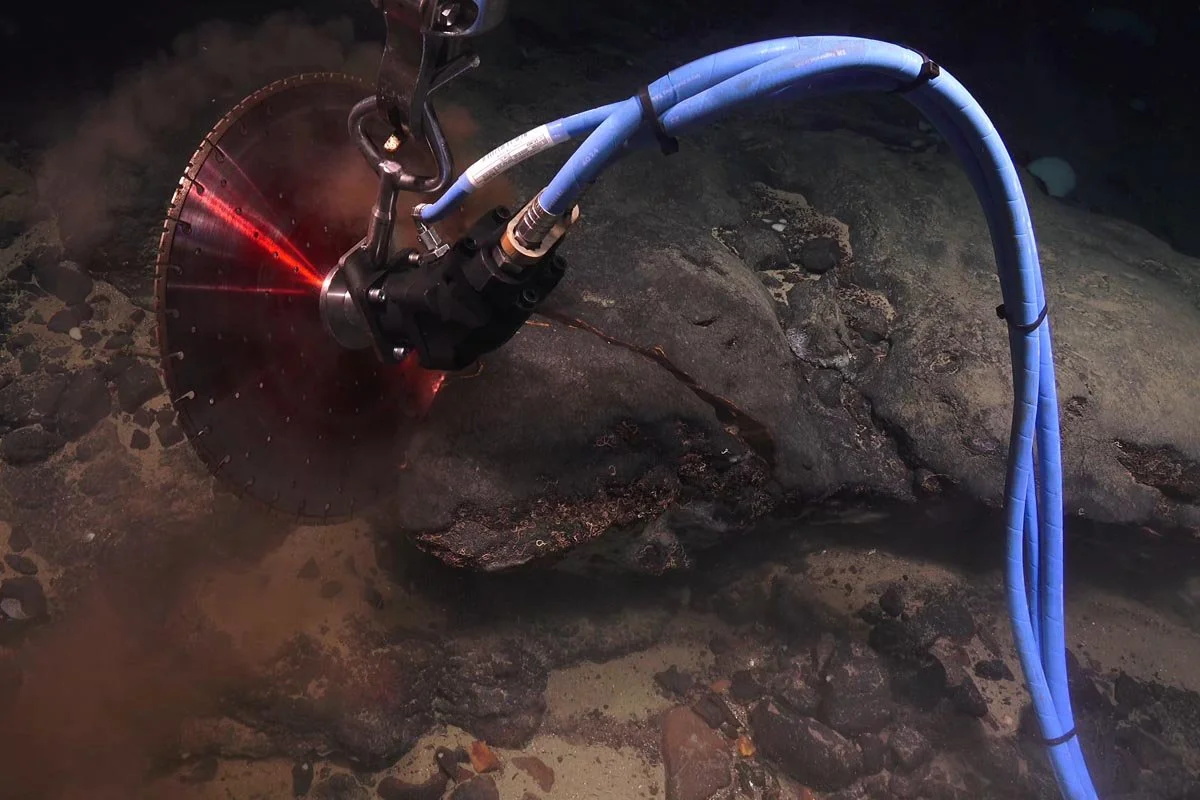
The ROV spent nearly an hour cutting out a rock sample using this circular saw. For geologists seeking to unravel a region’s history, it is crucial to obtain samples that are in situ — rock that lies where it belongs — as opposed to blocks that may have been transported and deposited by a melting iceberg. Photo: Ægir 6000 / NORMAR
In addition to remote sensing, the expedition also explored selected locations along the seismic lines with a remotely operated vehicle (ROV). These dives made it possible to observe the seafloor directly and to collect rock samples, that provide hard evidence — quite literally — of what the seafloor is made of. Much of the analysis work begins only once the expedition is over, as the bathymetric, seismic, gravity, and magnetic datasets will be processed and analysed in detail.
The same strategy, combining remote sensing and ROV rock sampling, was used at both the East Greenland Ridge and the Polarstern, a seamound in the Sophia Basin (north of Svalbard) about which very little is known.
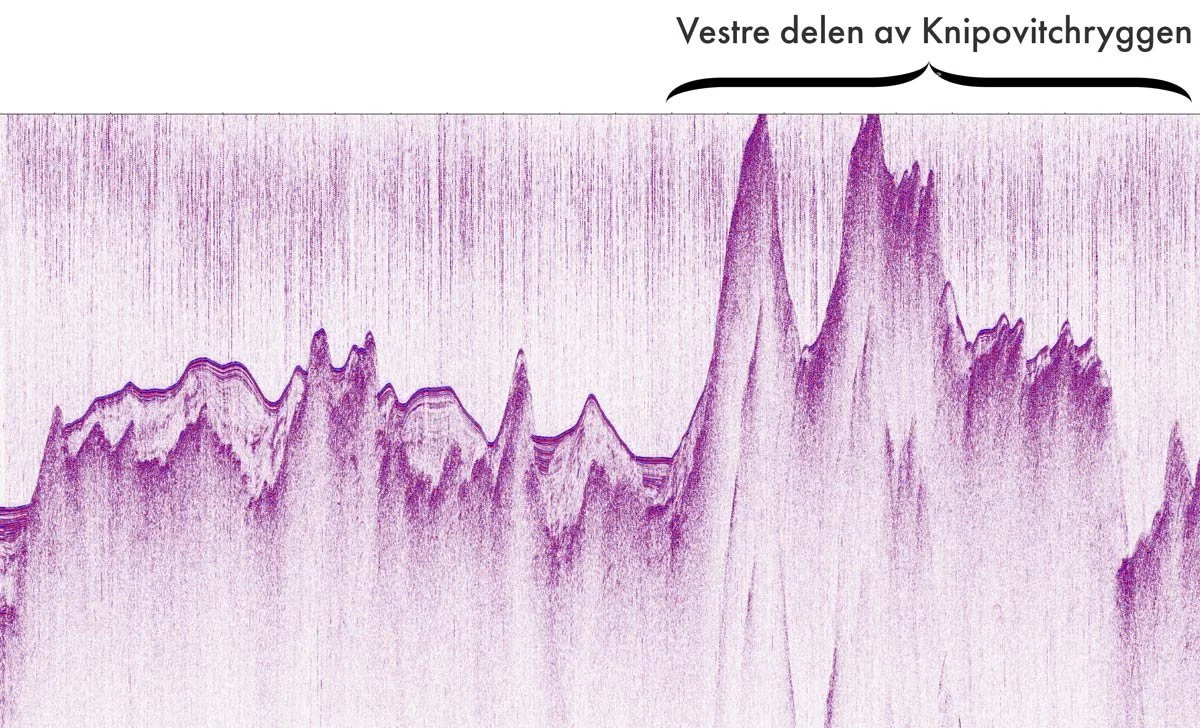
Seismic profile from the first line of this expedition, across the East Greenland Ridge. The upper area of the figure represents the water, the lower part represents the underlying geology, and the line between them marks the seafloor. The first elevation on the left is the East Greenland Ridge, while the next two are the little-known structures. The two lower arrows show how these structures continue down into the subsurface, suggesting that they are older than the sediment layers they protrude through.
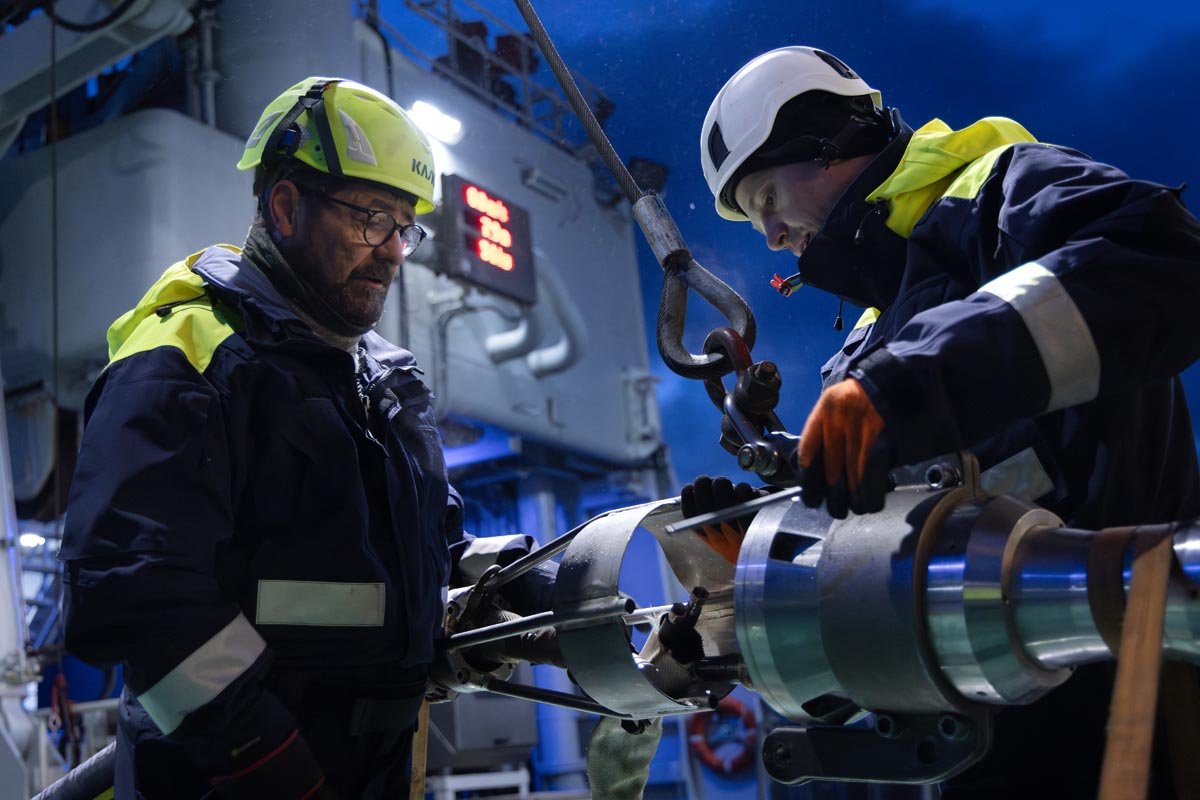
Preparing the seismic equipment: Per Trinhammer (Aarhus University) and Sigurd Bøgelund Andersen (GEUS).
Sediment sampling: Reading the seafloor’s memory
Another key activity of this expedition was to gather sediment samples. At depths of up to 4000 metres and in sometimes choppy seas, this is anything but straightforward. Nevertheless, the coring on this trip has been remarkably successful, with nearly every sampling attempt returning full cores.
Because ocean floor sediments act as an archive of sorts, gathering them and analysing them is useful for a wide range of purposes. Some samples will be sent to SINTEF to be analysed for contaminants. Others, taken along the slope of the Sophia Basin, north of Svalbard, will be used for paleoceanographic studies. By analysing grain size variations in these sediment cores, researchers can reconstruct how ocean currents in the area have changed over time, with a particular focus on linking the strength of Atlantic water inflow to past episodes of abrupt climate change.
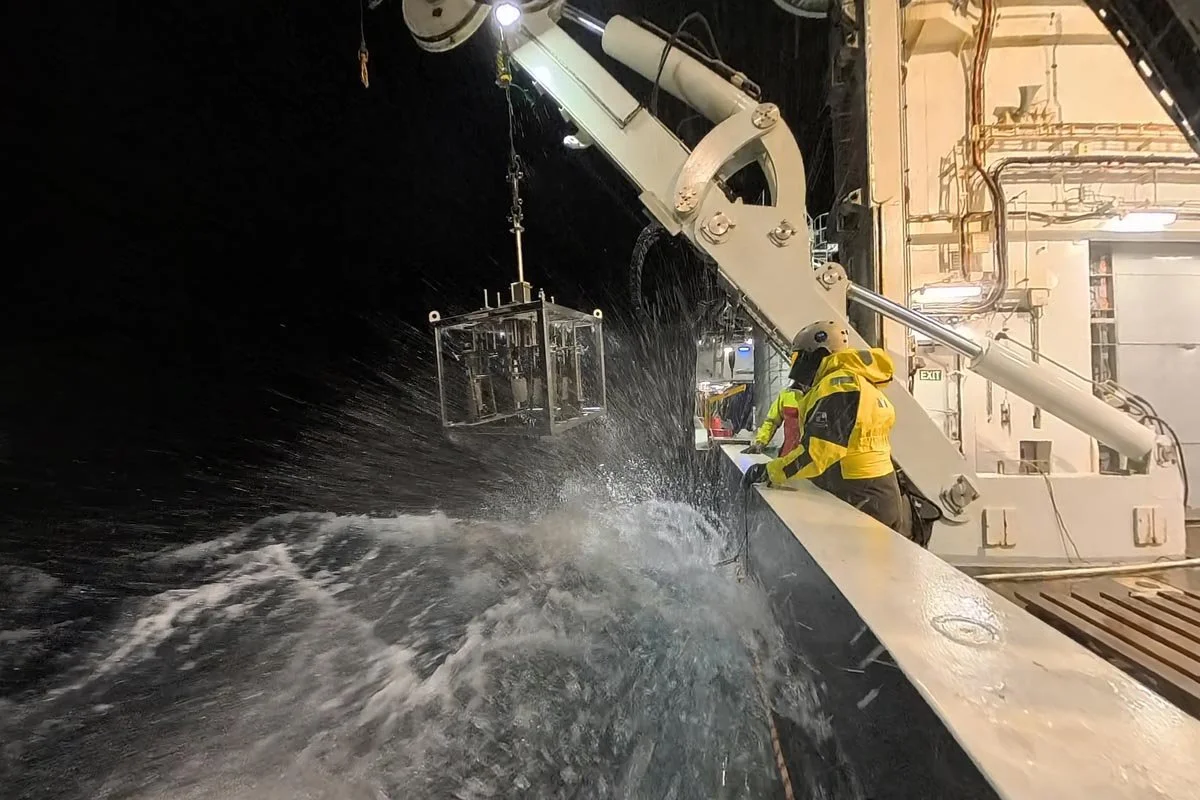
Sediment sampling in rough conditions.
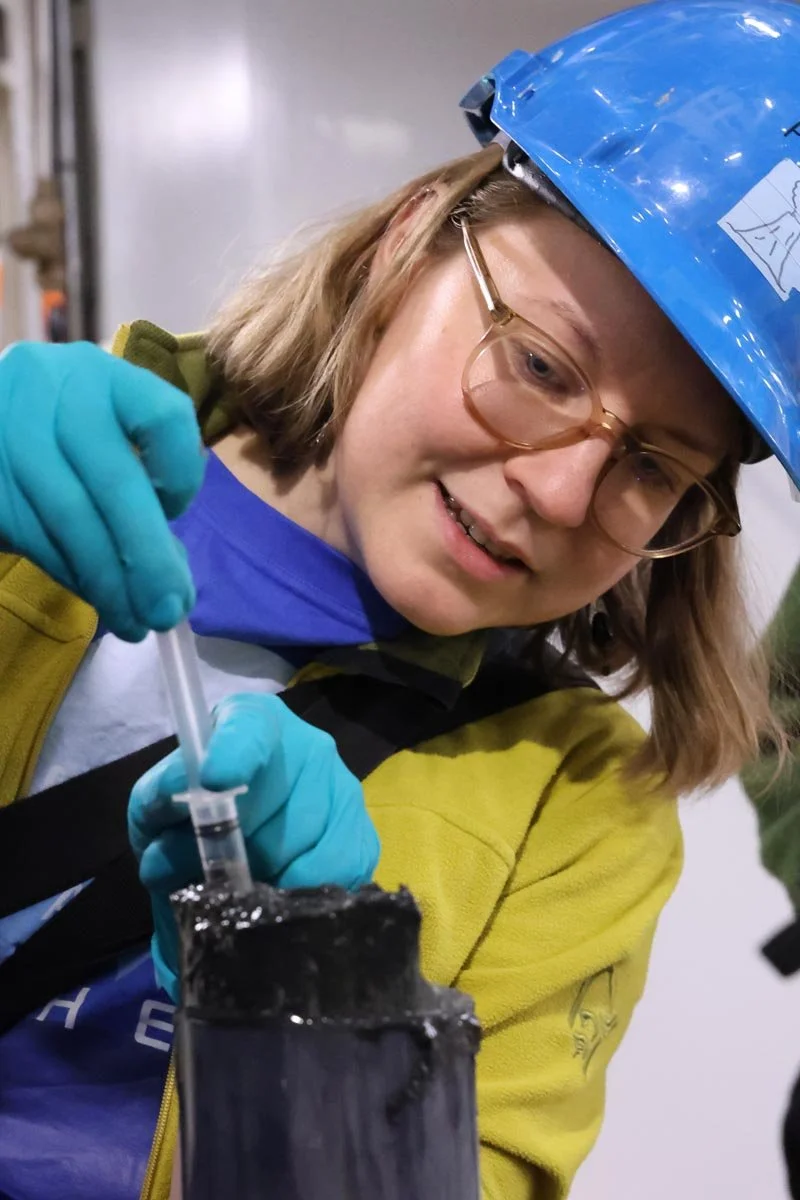
Left: Petra Hribovšek (UiB) collects a subsample using a syringe to study how microorganisms interact with animals in the sediment, and the role they play in the cycling of chemical compounds.
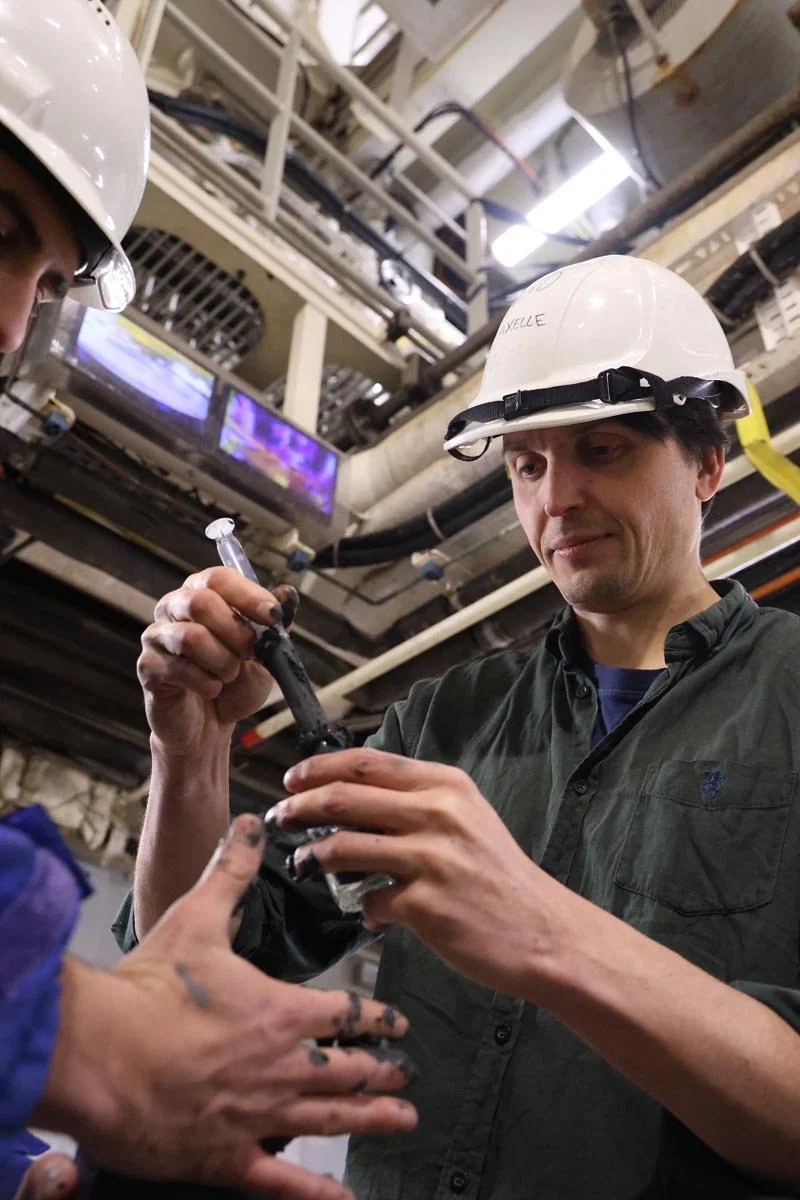
Right: Alexander Minakov (UiO) does the same to study gases in the sediments. Because such gases are produced through microbial processes and reactions between seawater and rocks, knowledge of their composition can help interpret data from the surrounding area — including certain features observed in seismic images.
eDNA to map biodiversity
One important use of these sediments is to study biodiversity through environmental DNA, or eDNA. By analysing genetic traces preserved in the sediment, researchers can identify which organisms live — or have lived — in an area, from large animals to microscopic life, even when they are never observed directly. Under the lead of Thomas Dahlgren (NORCE) samples were taken from several distinct deep-sea regions to compare the fauna they contain. This work will help clarify how different these ecosystems are, knowledge that is increasingly relevant as discussions around deep-sea mining intensify.
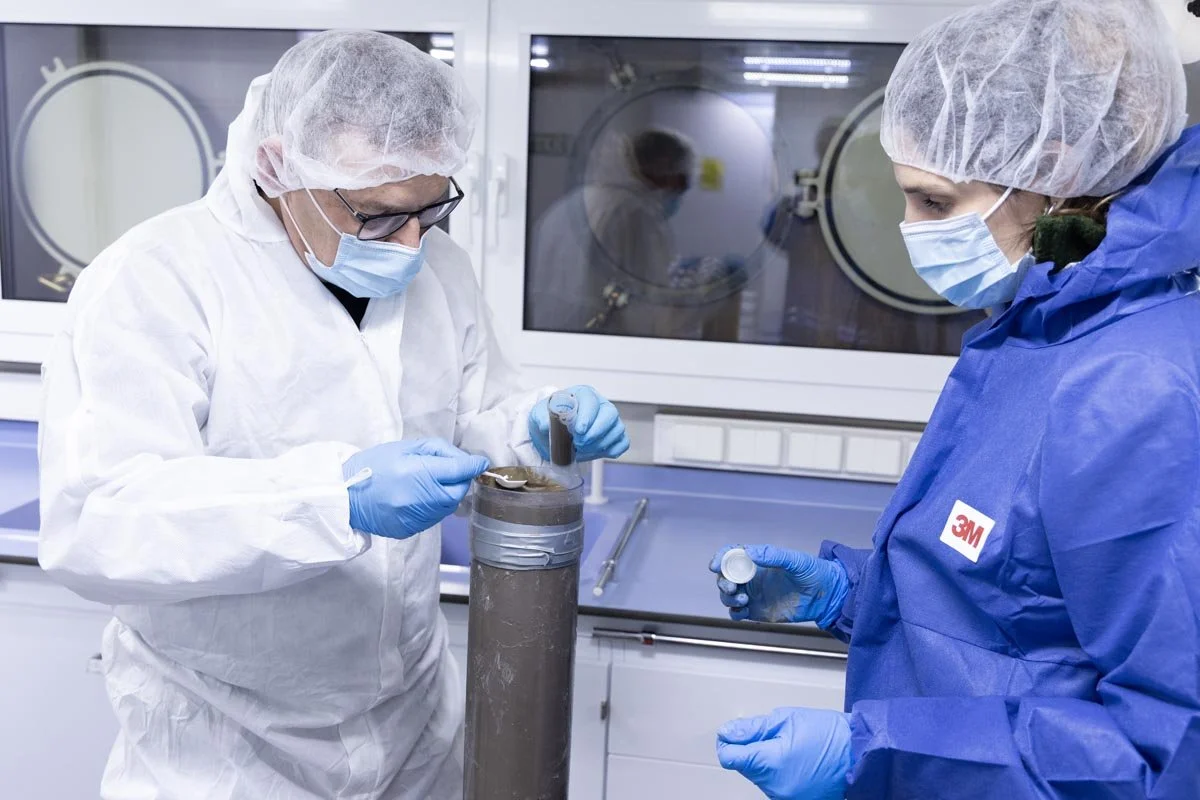
Thomas Dahlgren (NORCE) and Marta Gentilucci (UiB) subsample the uppermost sediment layer and store the material in separate glass vials. The samples are then frozen and sent to NORCE’s DNA laboratory in Bergen.
Pore fluid to understand the microbes of the deep
Another way sediments can be read is through pore fluid: the water trapped in tiny spaces between sediment grains. Using a syringe fitted with a special filter, scientists carefully extract this fluid from split sediment cores and analyse its chemical composition at different depths. These chemical profiles reveal which substances are available as energy sources, offering insight into what kinds of microbes live in the sediments and how active they are deep below the seafloor.
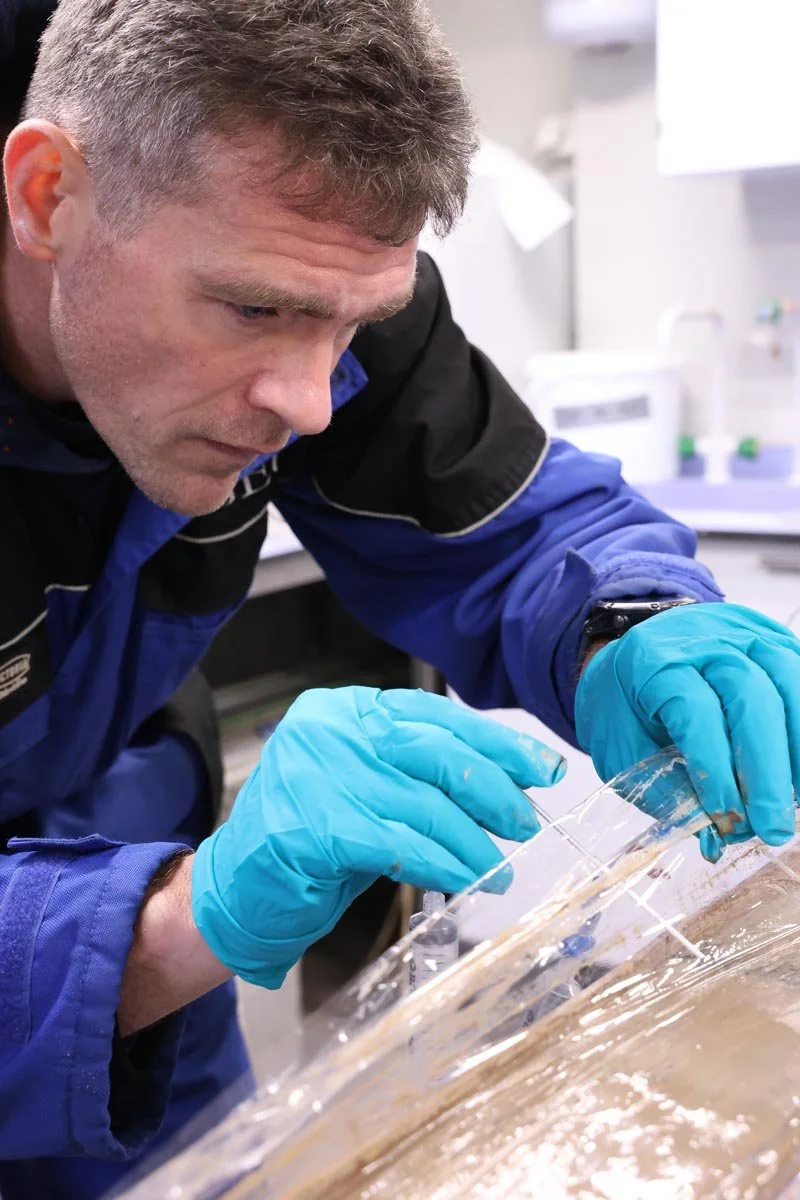
Expedition leader Steffen Leth Jørgensen at work setting up a syringe to extract pore fluid from a sediment core.
A focus on biology
This expedition brought together the largest group of biologists of any GoNorth expedition to date. The ROV was used extensively to explore how life is organised on the deep Arctic seafloor. Near the Jøtul hydrothermal vent field, UNIS scientists Carla Lopez Mateo and Arunima Sen used the ROV to take pictures that will later be put together to create a mosaic of a section of seafloor. The idea is to document which species are present, how they are distributed, and how they relate to the underlying geology. They also used the ROV to collect sediment cores to look at meiofauna: tiny animals that live between grains of sand at the bottom of the sea.
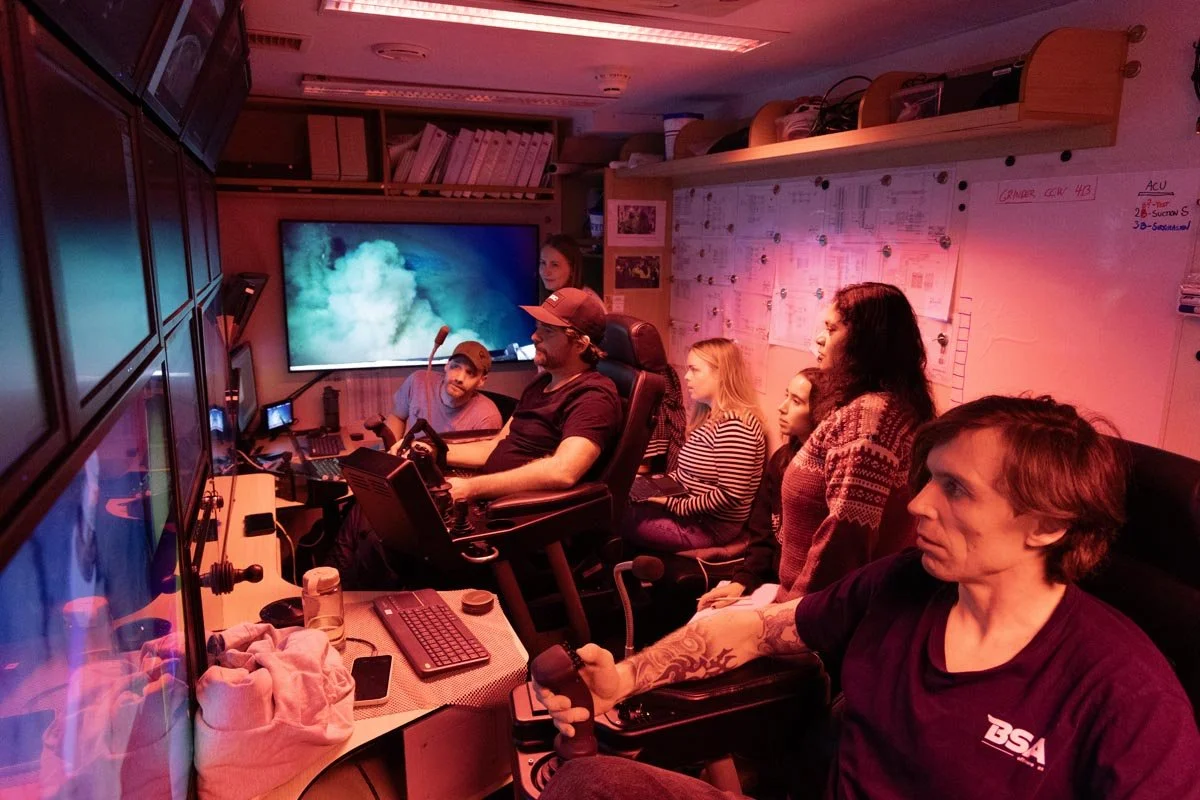
Snapshot of the ROV’s control room during the Jøtul dive. Left to right: Frode Evensen (BSA), Jonas Broberg (DWS), Maja Jæger (UiB), Ingvild Aarrestad (UiB), Carla Lopez Mateo (UNIS), Arunima Sen (UNIS), and Andreas Storebø (BSA).
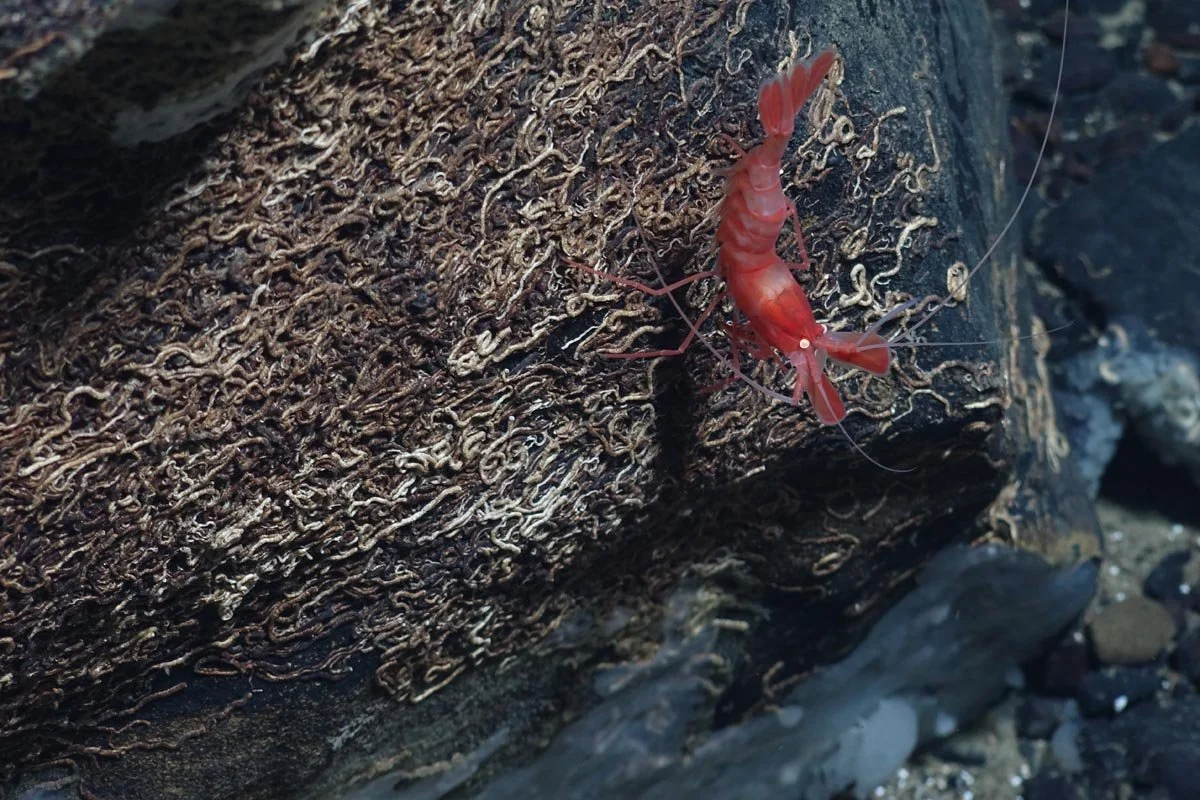
A Bythocaris leucopis, a deep-sea shrimp also known as “white shrimp.” It is sitting on a rock covered in tube worms. What we see in the image is the worm’s calcareous tube — a hard shell made of calcium carbonate that protects the animal. The worm can extend itself to feed, but never leaves the tube entirely. Photo: Ægir 6000 / NORMAR
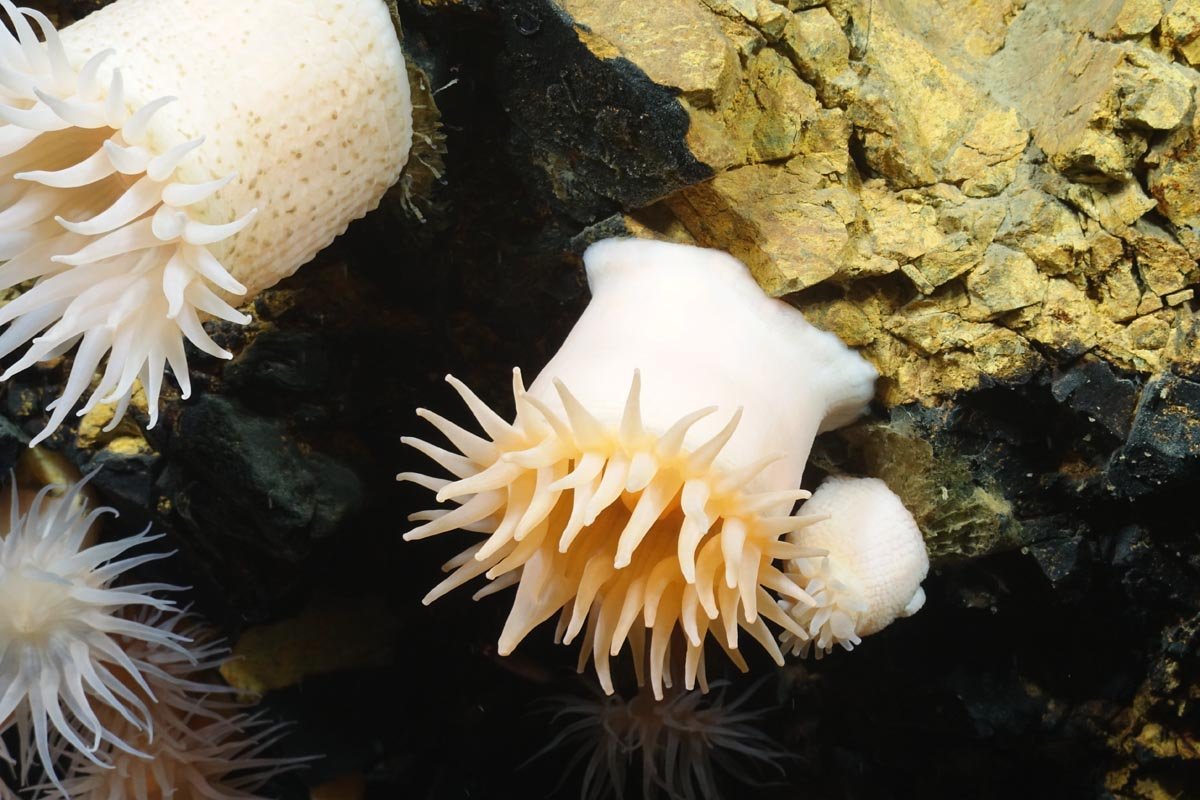
Close-up of an anemone on one of the Sophia Basin ROV dives. Photo: Ægir 6000 / NORMAR

Who is observing whom? This amphipod retreated (wisely?) into its burrow as the ROV approached. Photo: Ægir 6000 / NORMAR
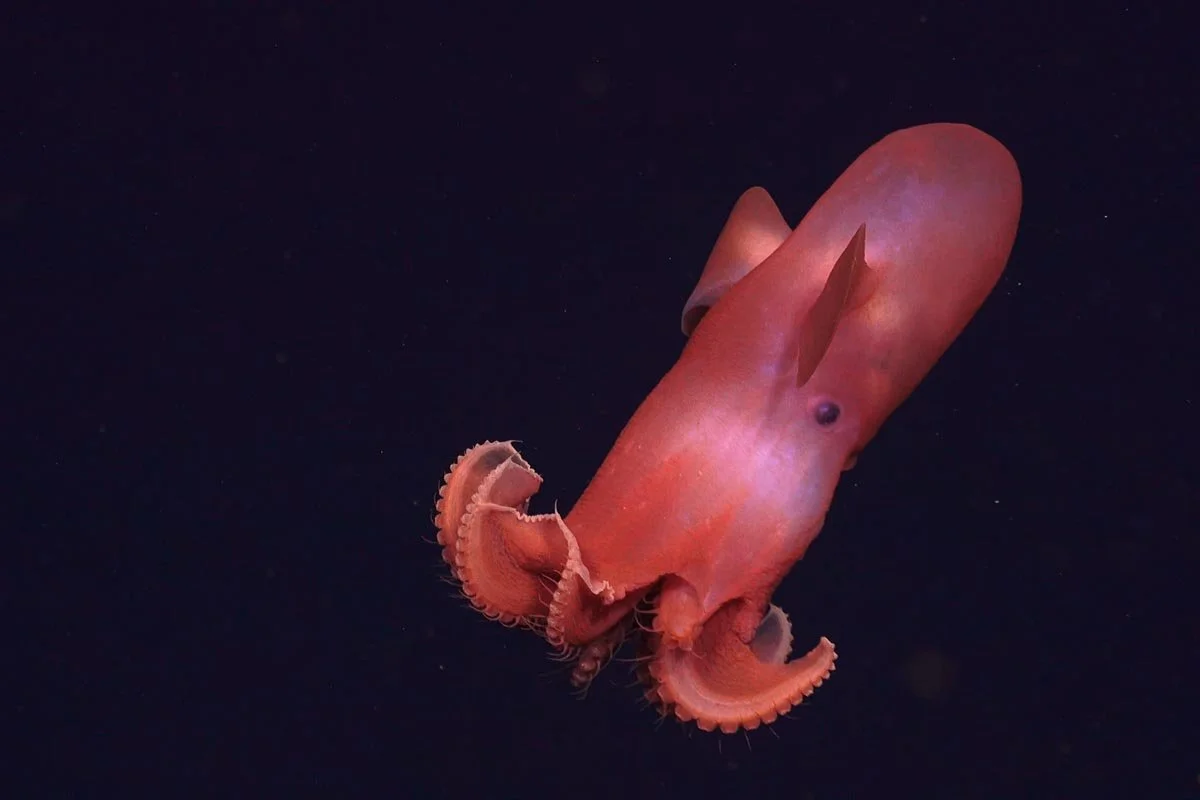
Always a crowd favourite: Cirroteuthis muelleri, known as the “dumbo octopus,” is often encountered at these depths. It is hard not to read a sense of curiosity into the way it dances in the ROV’s light.
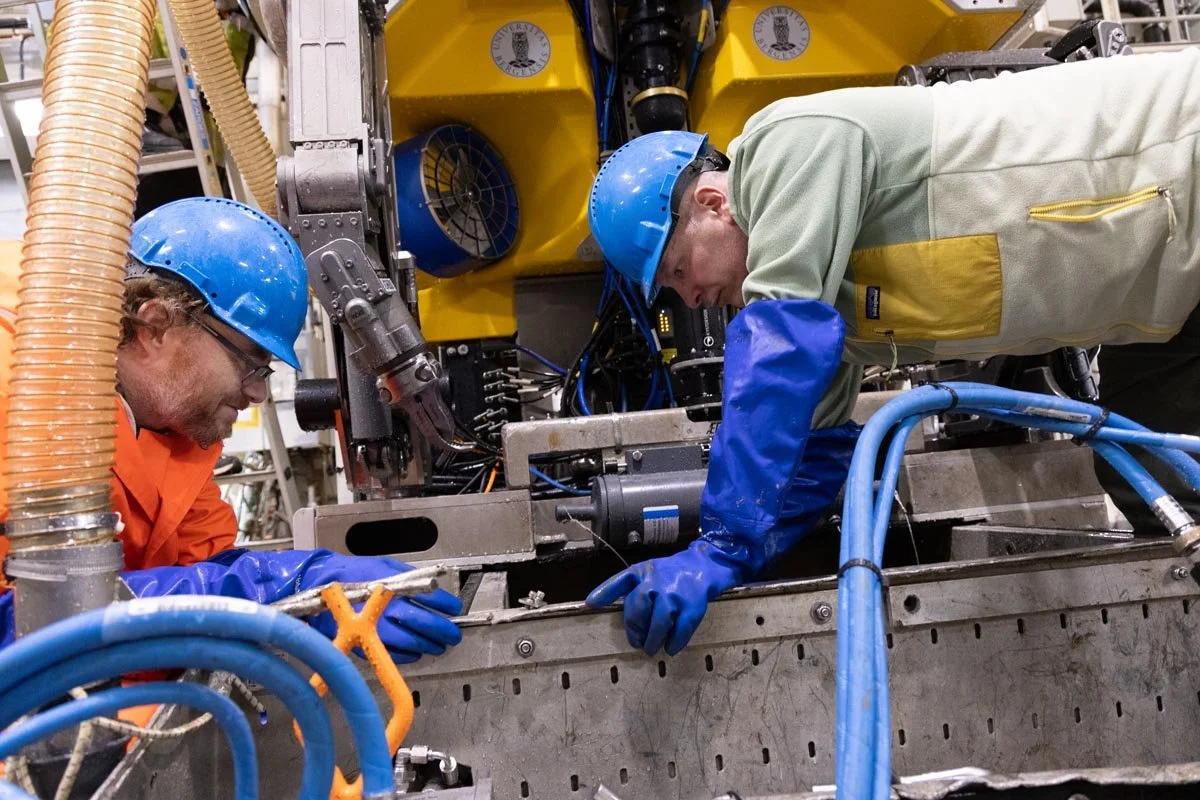
Tom Alvestad and David Rees (both UiB) retrieve samples from the ROV’s main sample drawer.
Anthropology at Sea
Among the geophysicists, biologists, and crew on board was one researcher whose focus was not the seafloor, but the people studying it. Anthropologist Marta Gentilucci (UiB) is using the expedition as part of a Marie Skłodowska-Curie project on deep-sea mining, examining how knowledge, expectations, and uncertainties take shape around an industry that has yet to begin. By living and working alongside the scientists at sea, she gains close insight into the practical challenges, expertise, and relationships that would also underpin any future attempt to extract resources from the deep ocean.
A custom-built sensor module to map sea ice
Although FF Kronprins Haakon did not enter the thickest ice during this expedition due to engine issues, it still operated in sea-ice conditions that allowed PhD candidate Ashiqul Alam Khan (NTNU) to test his custom-built sensor platform. The system combines stereo cameras, a thermal camera, and the ship’s own navigation and environmental sensors into a single, synchronised measurement chain; when ice floes are overturned by the ship, their exposed undersides make it possible to estimate ice thickness directly using three-dimensional reconstructions. Each thickness estimate is linked to precise position, time, ship motion, and weather data, creating a dataset that can later be used to explore how ice thickness and floe properties vary under different environmental conditions and to improve future sea-ice maps.
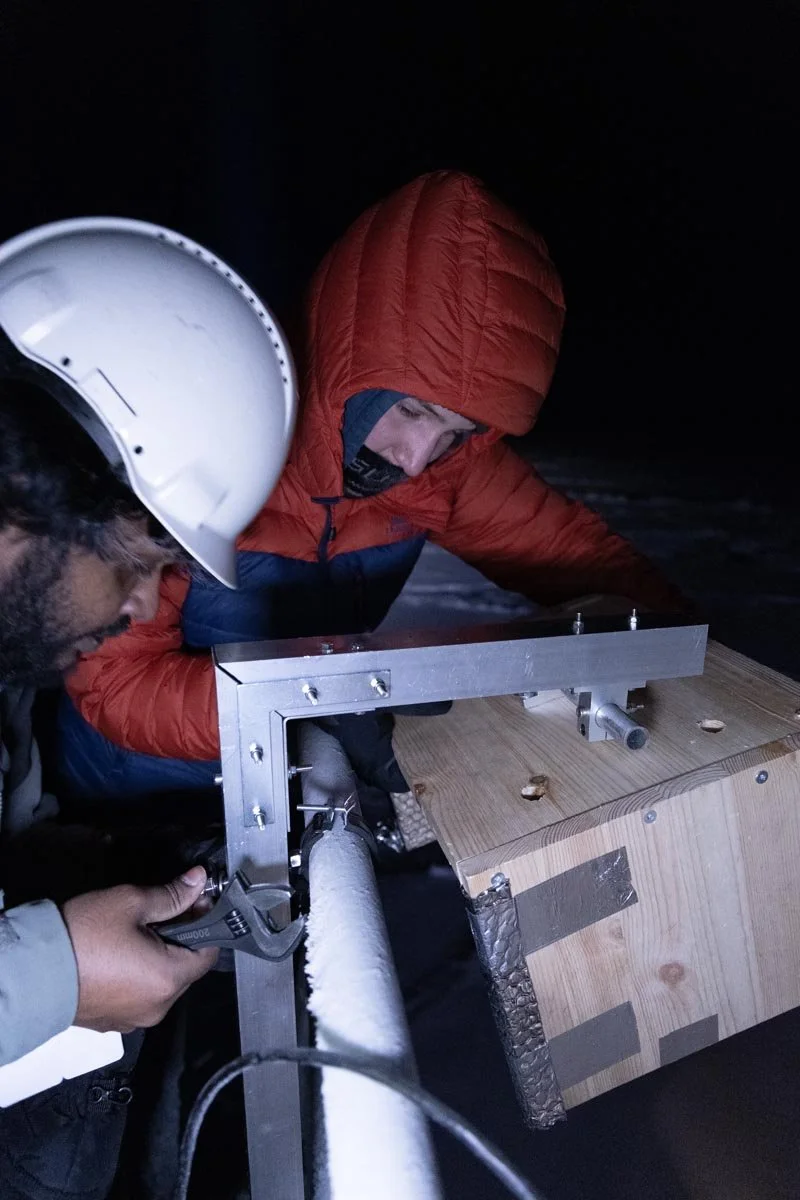
Ashiqul Alam Khan (NTNU) installs his sensor platform on deck six, assisted by Julia Göllmann (UiB). Sea ice is visible in the background.
Tracing moisture pathways with water isotopes
Throughout the expedition, an instrument measuring isotopes in atmospheric water vapour ran continuously on board FF Kronprins Haakon, providing near–real-time data thanks to daily calibrations and satellite connectivity. These measurements reveal where the moisture came from and how it moved through the atmosphere, helping scientists understand evaporation and moisture transport over ocean, ice, and open water. As a core component of the upcoming Arctic Ocean 2050 project, the GoNorth expedition served as a full-scale test of both the instrumentation and data-processing chain, delivering a high-quality dataset that will now be used to evaluate and improve isotope-enabled climate models for the Arctic.
GoNorth 2025 in numbers
4548 kilometres sailed
31 short sediment cores gathered with the multicorer
4 longer gravity cores
17 short sediment pushcores gathered with the ROV
3 seismic survey lines totalling 410 kilometers and including magnetometry
Continuous bathymetry, sub-bottom profiling and gravimetry
9 ROV dives
Weather as a constant companion
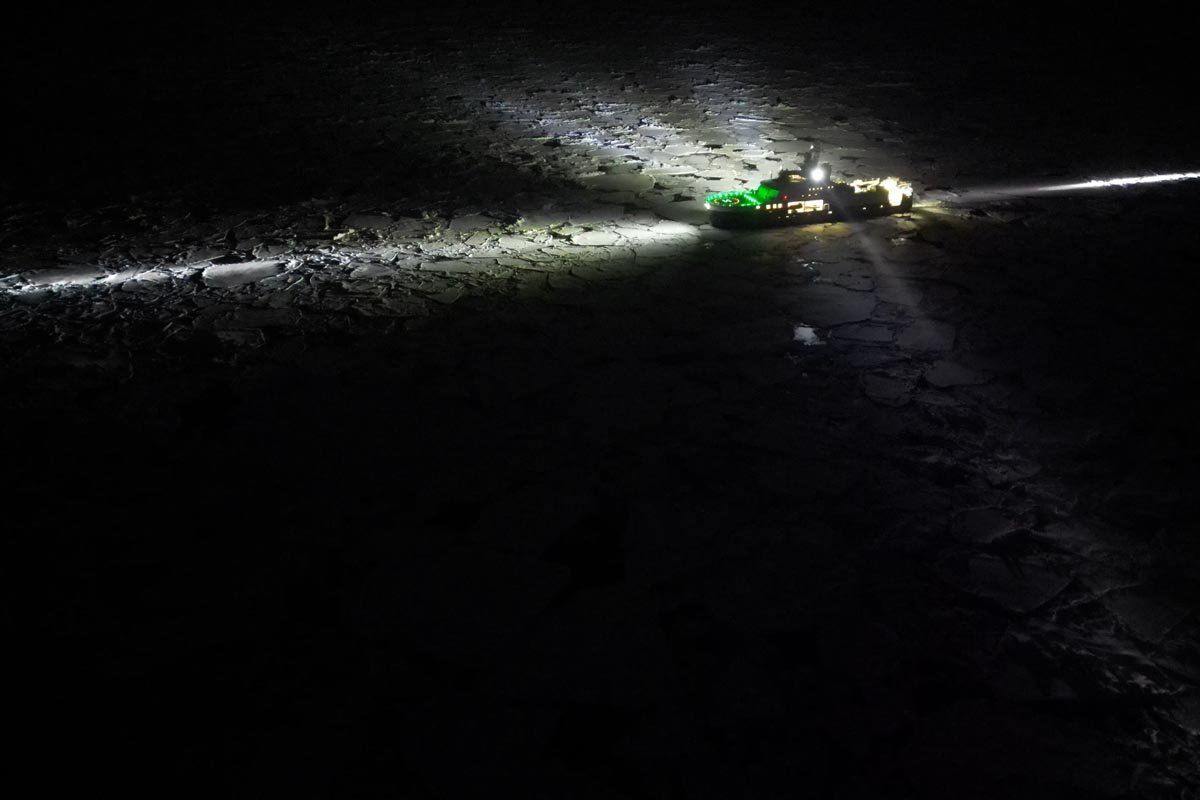
According to captain Karl Robert Røttingen, this was the roughest expedition ever undertaken by RV Kronprins Haakon. The ship sailed straight into bad weather at the very start of the voyage, sampling sediments while pushing north until the seas grew so rough that operations had to be halted altogether. Rough seas were encountered again on the return from the Sophia Basin, and after work at the Molloy Deep, a large weather system ultimately forced a premature turn south and dominated the long passage back to Tromsø. It is a voyage that everyone on board will remember, with sleepless nights punctuated by sudden jolts and cannon-shot bangs as waves struck the hull.
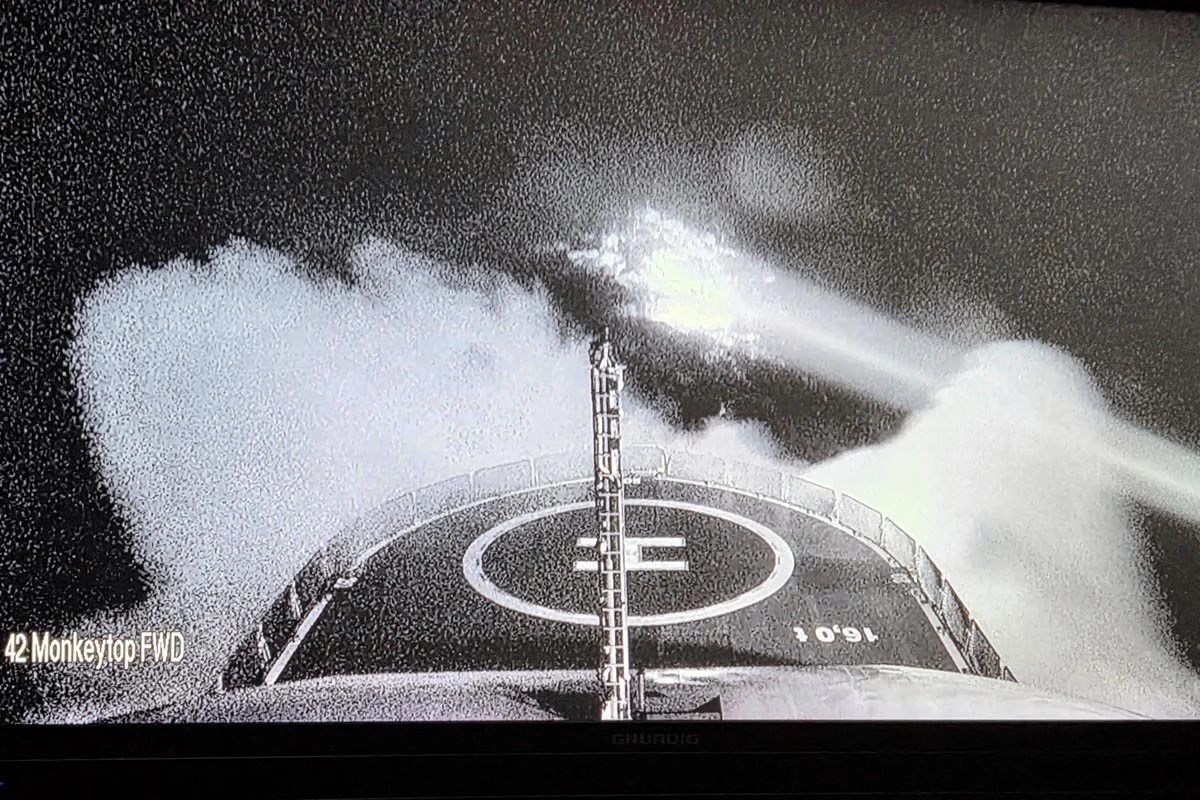
Water engulfs the helicopter deck as RV Kronprins Haakon weathers a storm. Photo: Ship’s own cameras.
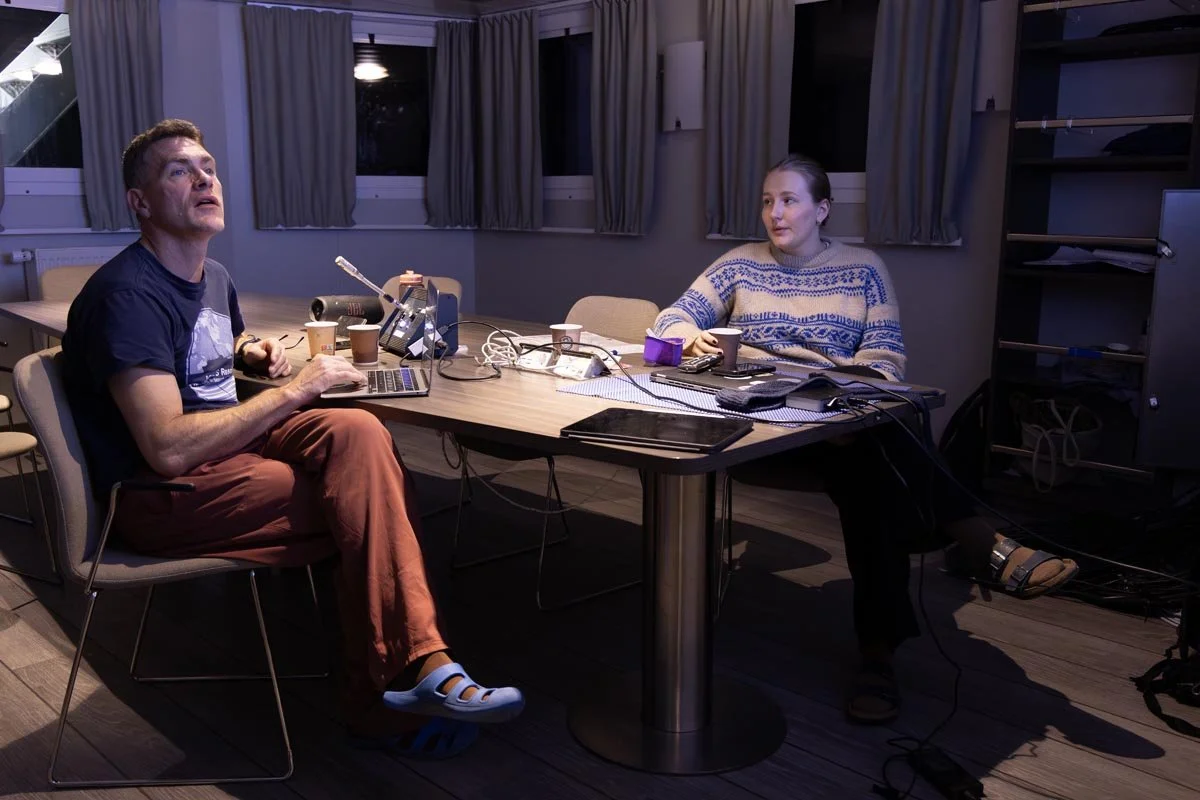
Expedition leads Steffen Leth Jørgensen and Maja Jæger (both UiB) had to readjust the plans multiple times due to weather and a mechanical issue. Problems with one of the ship’s main engines meant that Ultima Thule would not be reached, with objectives in Sophia Basin being accomplished instead.
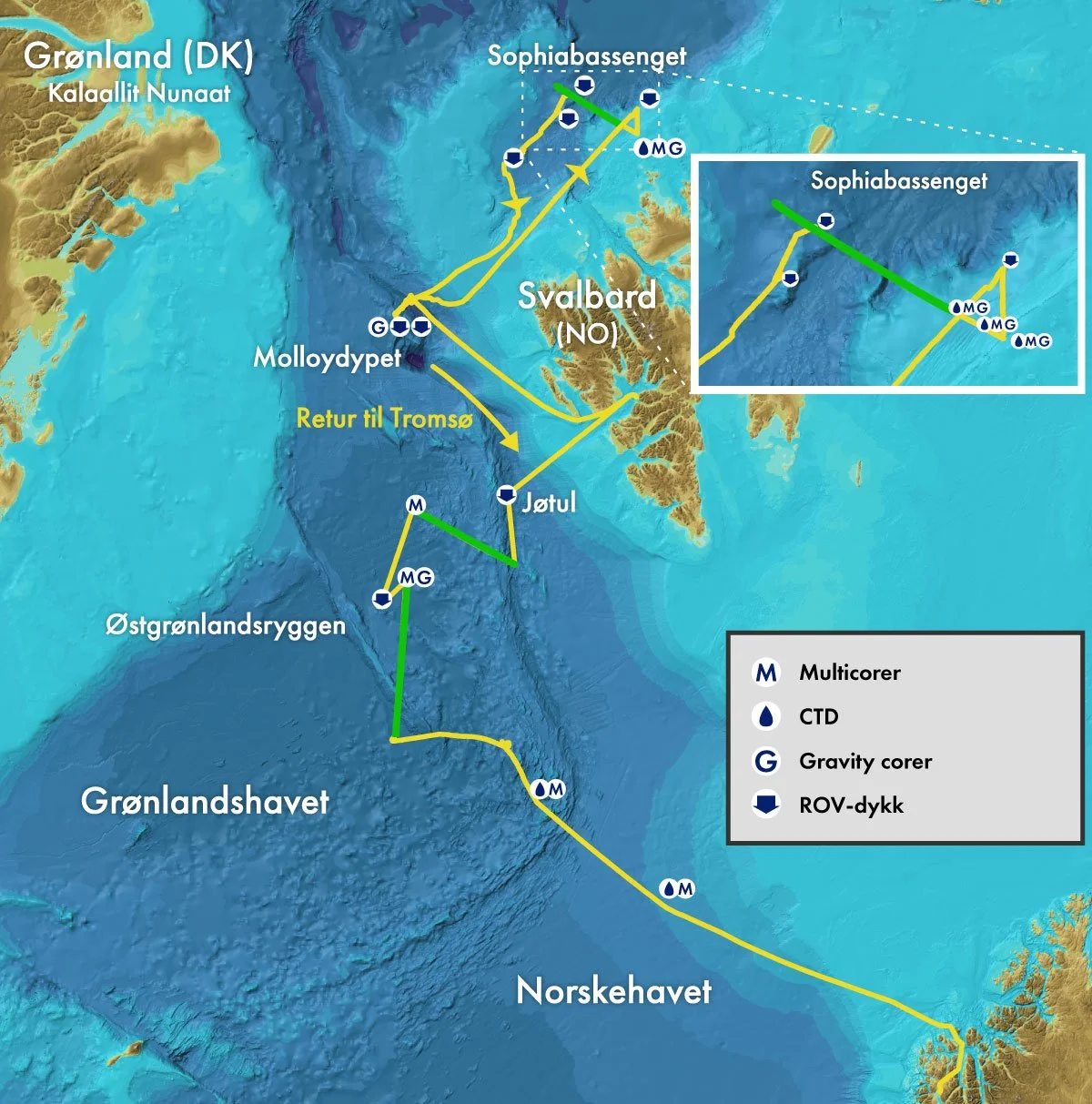
Map showing the ship’s path in yellow (the return transit from Molloy Deep to Tromsø is excluded for simplicity) and the various stations. Seismic lines are marked in green. Figure: Daniel Albert GoNorth/SINTEF. Map underlay : IBCAO.
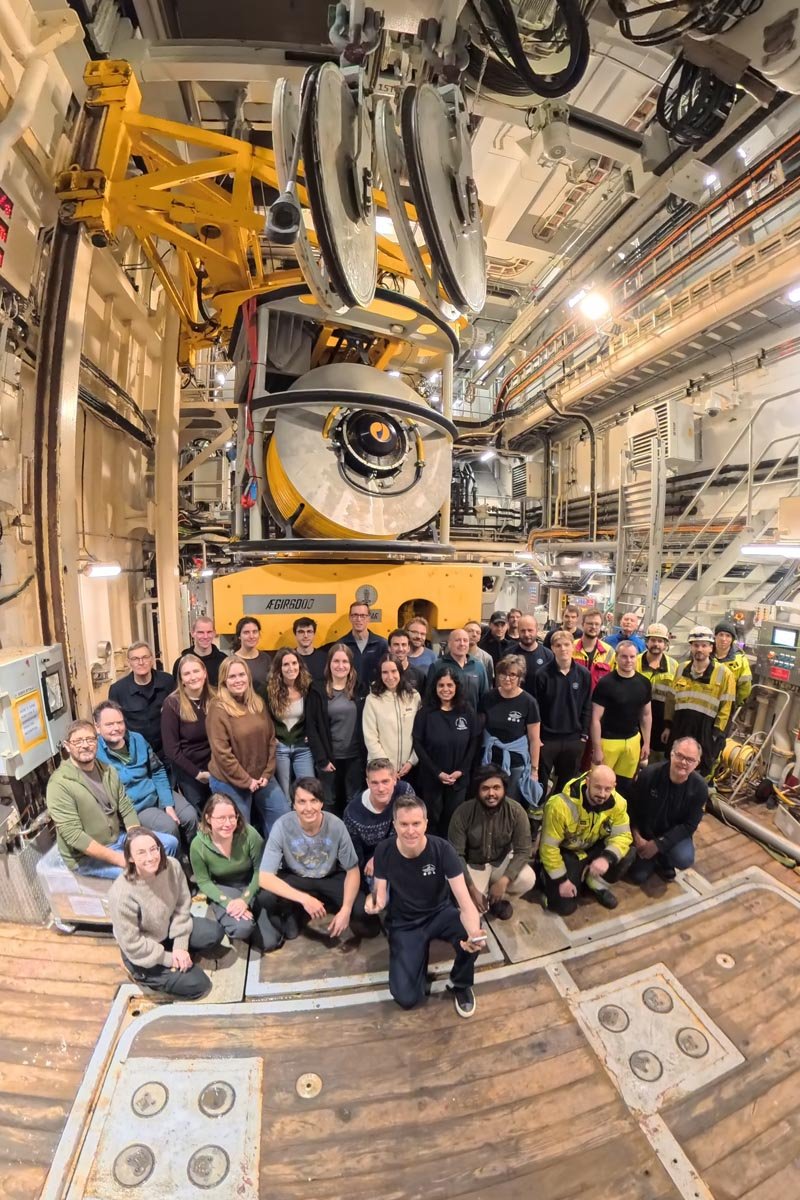
Left to right, first row : Hannah Rose Babel (UiB), Petra Hribovšek (UiB), Alexander Minakov (UiO), Steffen Leth Jørgensen (UiB), Daniel Albert (SINTEF), Ashiqul Alam Khan (NTNU), Andreas Wolden (HI), Karl Robert Røttingen (HI); Second row: Per Trinhammer (University og Aarhus), Dag Inge Blindheim (NORCE), Maja Jæger (UiB), Ingvild Aarrestad (UiB), Marta Gentilucci (UiB), Julia Göllmann (UiB), Carla Lopez Mateo (UNIS), Arunima Sen (UNIS), Carmen Gaina (UiO), Marius Hufthammer (HI), Mathias Molvik (HI), Jonas Broberg (DWS), Frode Evensen (BSA), Andreas Storebø (BSA); Last row: Thomas Dahlgren (NORCE), Sigurd B. Andersen (GEUS), Helen Latting (UiB), Julius Anton Friedrich (UiT), Thomas Funck (GEUS), Nil Rodes (UNIS), Tom Alvestad (UiB), David Rees (UiB), Bjørn Løfquist (Saga Subsea), Kai Roger Loven (DWS), Johan Skjøld (Saga Subsea), Knut Tarberg (HI), Per Bær (HI), Trym Hansen (HI), Roy Robertsen (HI).
Alle photos: Daniel Albert (SINTEF)