
This was the topic of a seminar organized by the Polar Academy at the University of Oslo on November 13.
The University Centre in Svalbard (UNIS) is undoubtably a success. It was established in 1993 as part of a revised strategy for development of Longyearbyen. Up until the 1990s, Longyearbyen was a company town, organized around the coal mining company Store Norske. Now, the government wanted Longyearbyen to be more than coal mining. Tourism and education/research were the new directions to go.
A key element was that UNIS should focus on the natural sciences and use Svalbard itself as the laboratory. This, more than anything else, makes UNIS unique.
In this seminar, we aimed to highlight the opportunities and challenges facing UNIS in the years ahead. What policy signals are being sent by the Ministry of Education and Research and the Svalbard White Paper? What role does UNIS play in the local community? What needs to be done to encourage Norwegian universities to send more Norwegian students to UNIS, and where does the potential for research collaboration lie?
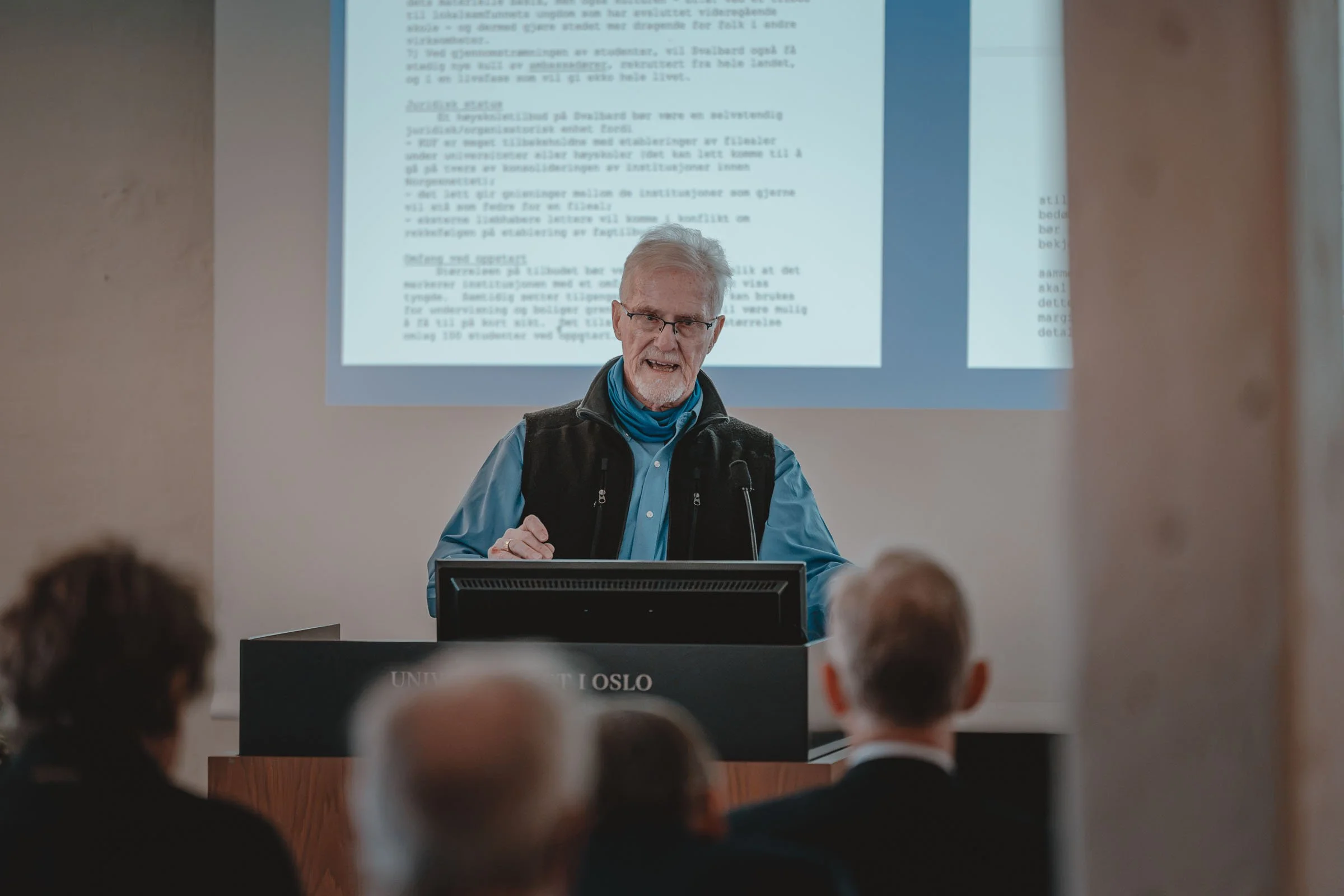
Gudmund Hernes, former Minister of Research and Education, reflected on the ideas and decisions behind the establishment of UNIS in 1993. Photo: Ragnhild Utne / NVP
As part of the seminar, Gudmund Hernes, a former minister of research and education who was responsible for establishing UNIS in 1993, presented the ideas and decisions leading up to it.
UNIS was a unique institution from the beginning. The government wanted it to be an international university and decided that the day-to-day language should be English.
Over the years, UNIS became very popular for international students, and the Norwegian students became a minority. This was among the topics discussed during the seminar.
The speakers of the seminar included representatives from the ministry of education and research, the Norwegian Research Council, the local authorities in Longyearbyen and UNIS itself.
The framework for research and higher education is established through White Papers issued by the Norwegian Ministry of Education and Research (presented by Anne Kari Johansen). These include the Strategy for Higher Education on Svalbard and the Strategy for Ny-Ålesund. The establishment of the Svalbard Research Office, led by the Norwegian Polar Institute (from 2025), is intended to coordinate research activities and maintain an overview of research conducted in Svalbard.
UNIS will play a central role in education and research on Svalbard. It also plays an important role in Norwegian Svalbard policy and national knowledge policy, and increasingly in Norwegian security policy.
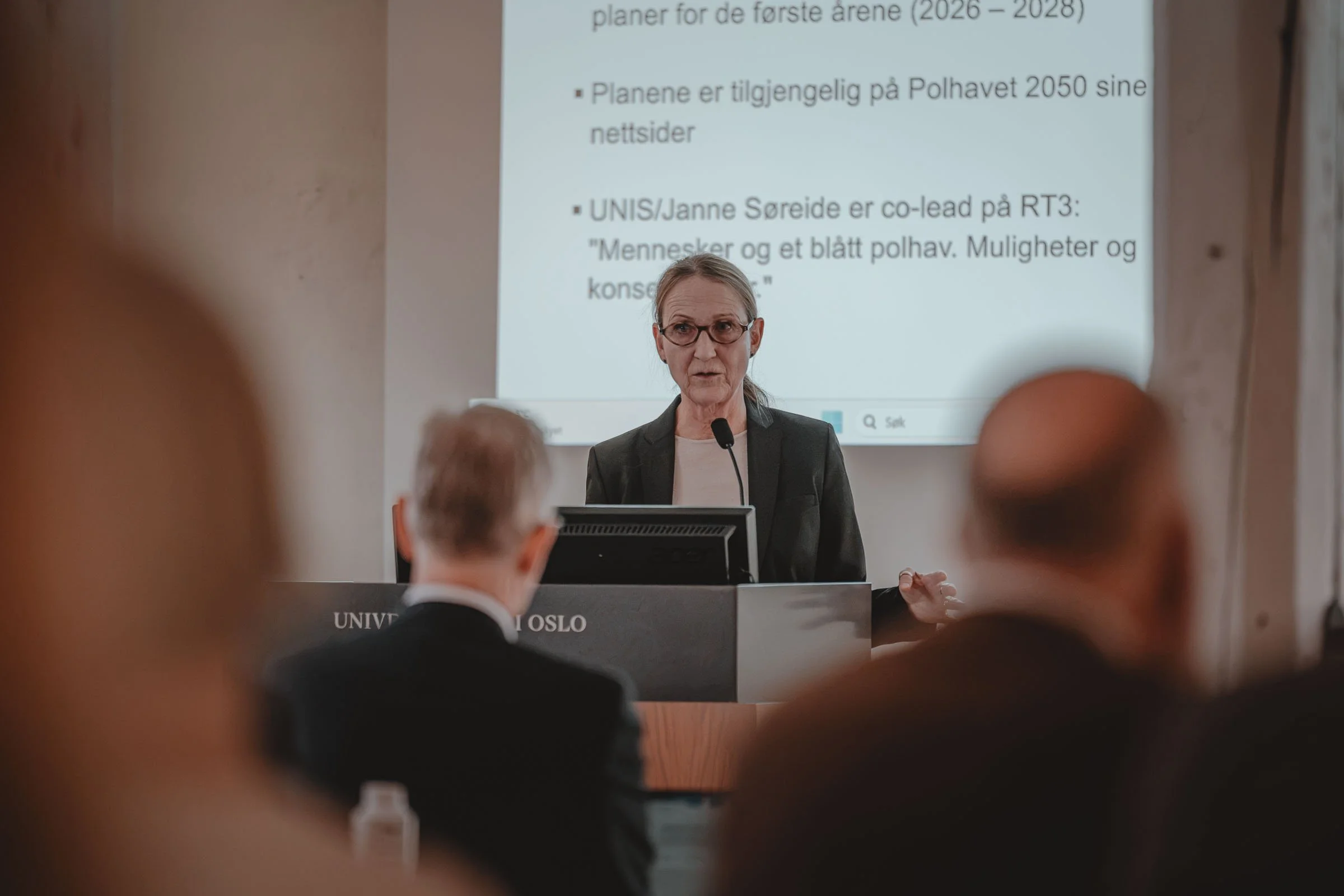
Lena Andersen from the Research Council of Norway highlighted UNIS’s role in Arctic research, including the Arctic Ocean project, IPY and funding opportunities for research in Svalbard. Photo: Ragnhild Utne / NVP
Lena Andersen from the Research Council of Norway highlighted UNIS’s role in the Arctic Ocean project and its involvement in the International Polar Year (IPY). The education and training of master’s and PhD students will be important for the work currently underway and for activities planned in the coming years.
The Research Council of Norway also referred to the AFG and SSG schemes as sources of funding for research in Svalbard.
Terje Aunevik from the Longyearbyen Community Council emphasized in his presentation that UNIS must deliver high-quality education and research. He highlighted the importance of UNIS’s contributions to addressing challenges related to water supply, permafrost and energy supply in Longyearbyen, noting that this work has been highly valuable to the Community Council.
In the second session, representatives from five Norwegian universities shared their thoughts about where UNIS should go from here.
Gunn Mangerud, from the University of Bergen, highlighted the importance of strengthening collaboration between UNIS and mainland universities. She emphasized that the current geopolitical situation presents a unique momentum for reinforcing Norway’s scientific presence and leadership in the Arctic, and that this should be linked strategically to the build-up towards the next International Polar Year (IPY).
She further emphasized the uniqueness of UNIS by its geographical position, a good research platform, and a great place to do field studies. Collaboration on research infrastructure, more multidisciplinary courses, in strategic areas for UNIS, and co-supervising master- and doctoral students would increase the interest to study at UNIS. She also emphasized the use of adjunct positions and flexibility with regards to on-site presence, which helps attract early-career researchers developing a sense of affiliation with UNIS.
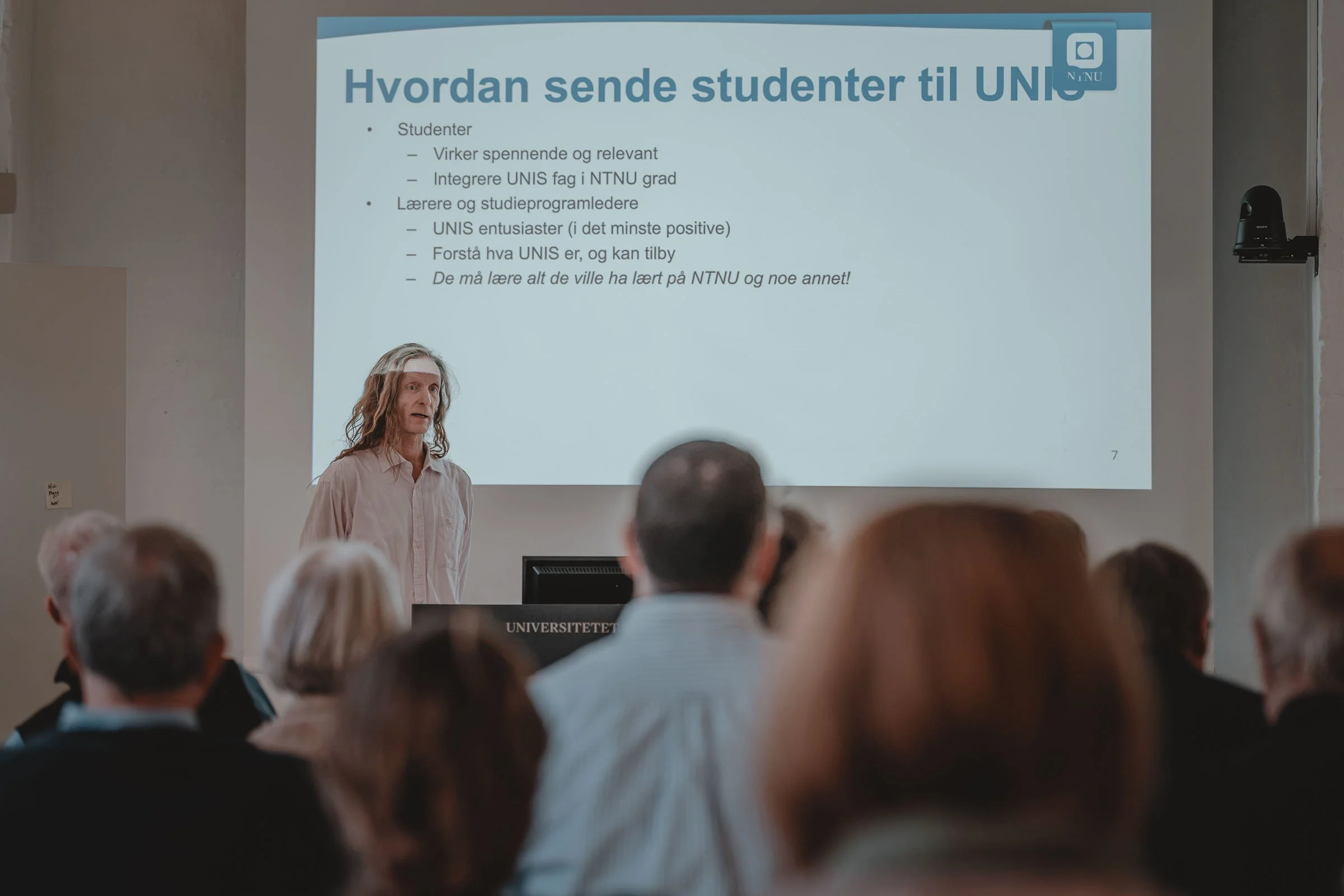
Knut Høyland from NTNU emphasized the need to build greater enthusiasm for UNIS at Norwegian universities and strengthen supervision through closer academic links. Photo: Ragnhild Utne / NVP
Knut Høyland, from NTNU, was concerned with creating a better UNIS enthusiasm among employees at Norwegian universities to get more Norwegian students to do studies at UNIS. Hiring Prof. II at UNIS would increase supervision of more Norwegian students at UNIS.
Vidar Sørum, from University of Tromsø, presented a co-publication analysis between UNIS and UiT. This analysis show that number of students from UiT to UNIS has dropped from 58 students in 2021 to 28 in 2025. An increase of the research project portfolio between the UNIS and UiT would increase the number of students to UNIS. New projects, such as polar related projects from Norwegian Research Council (Polar Ocean), Arctic Field Grant (AFG), Svalbard Strategic Grant (SSG), IPY and Horizon Europe, together with a better course portfolio could be a way to increase the number of students from UiT to UNIS.
Solveig Kristensen, from University of Oslo, focused on the co-operation on research and education between UiO and UNIS. Education is built on established research developed by researchers. The combination of experimental studies, field studies, and mathematical modelling is an interesting opportunity for closer collaboration. Establishment of Prof. II positions, co-operation for new infrastructures and better co-operation for education of master and Phd students will improve the recruitment of students from UiO to UNIS.
Vigdis Tverberg, from Nord University, raised the question of how to do a better recruitment of students to UNIS by improving the advertisement of UNIS courses. The high cost of living in Longyearbyen makes it difficult for some students to take courses at UNIS.
The seminar attracted almost 60 participants. Most of them were either connected to UNIS through present research and education or have a history of involvement. For UNIS, this was opportunity to discuss the present challenges and get advice from their main academic and societal partners.
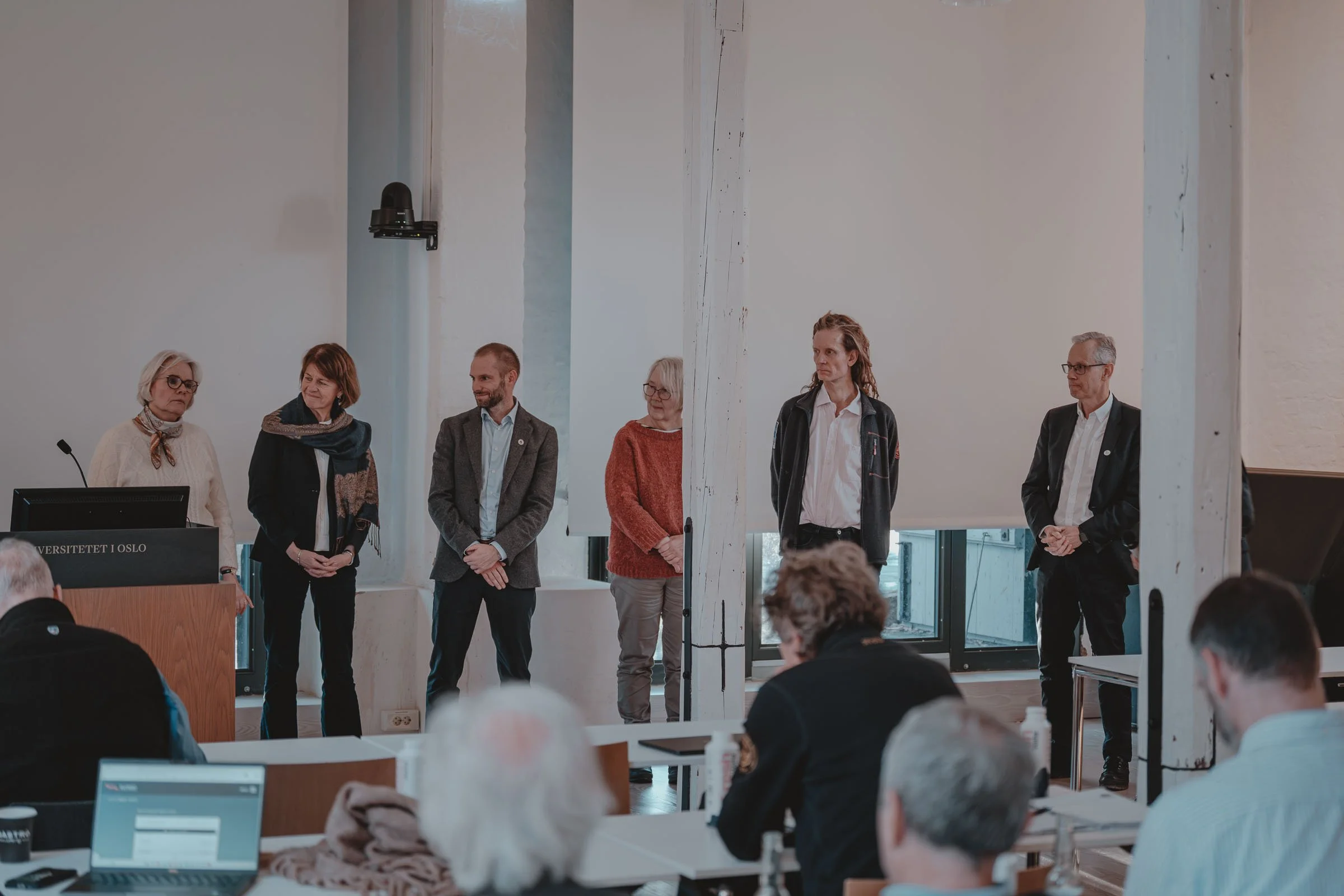
The seminar concluded with a joint discussion, bringing together speakers and participants to reflect on UNIS’s challenges, opportunities and future direction. Photo: Raghnild Utne / NVP